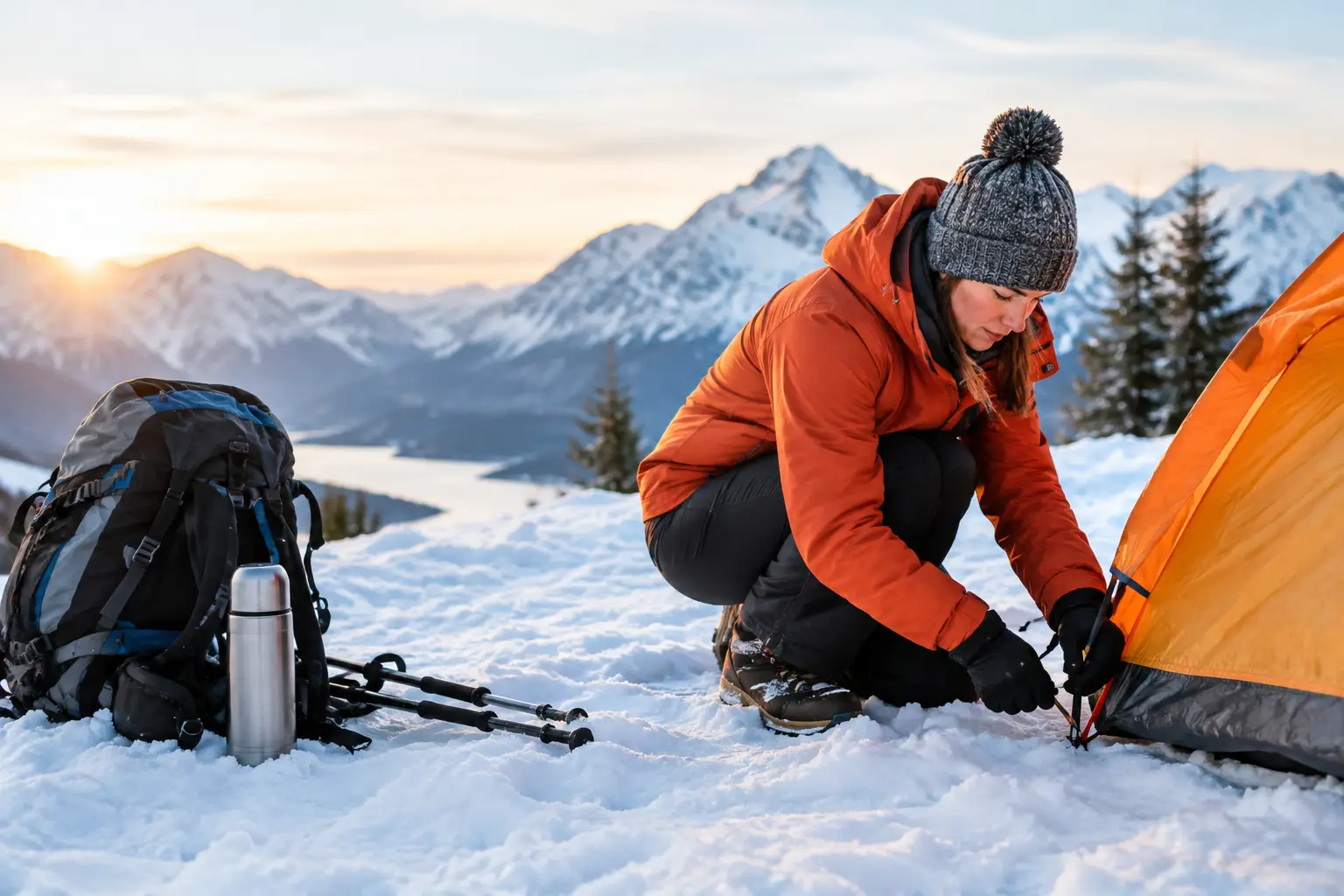
Winter camping can be quiet, peaceful, and enjoyable; right until wet clothing, a missed weather update, or a poor campsite choice changes the experience. Winter camping safety focuses on the decisions that help you retain your body heat, preserve your energy, and give you room to change plans before a small problem becomes an emergency.
Winter Camping Safety: Start With the Forecast
Winter conditions are not defined by the overnight low alone. Wind speed, snowfall, recent rain, cloud cover, elevation, and road conditions can matter just as much. A forecast of 25°F may be comfortable in a protected forest campsite with dry snow, but far more serious on an exposed ridge with 20 mph wind.
Check the forecast for your exact camping area, not only the nearest town. Look at hourly temperature changes, wind gusts, precipitation type, and the expected low for the entire trip. Also check road closures, avalanche conditions where applicable, and whether the campground remains open in winter. Many water systems, restrooms, and staffed facilities close for the season.
Build a margin into the plan. If your sleeping setup is rated near the predicted low, you may not have enough margin for wind, fatigue, damp clothing, or an inaccurate forecast. Choose a bag, insulated pad, layers, and shelter setup that can handle colder conditions than you expect. For family trips and first winter overnights, a drive-in campsite or vehicle-based setup gives you more options if conditions deteriorate.
Choose a Site That Works After Dark
A good summer campsite is not automatically a good winter campsite. Avoid low spots where cold air settles, exposed ground that catches wind, and areas beneath dead limbs or snow-loaded branches. Do not camp under a steep slope where snow, rocks, or ice could slide down overnight.
Look for natural wind protection, such as dense trees or a terrain feature, while still keeping a safe distance from hazards. In snowy terrain, pack down the tent platform before pitching your shelter. Loose snow compresses under body weight and can create cold gaps or uneven ground after you settle in.
Keep the tent entrance pointed away from the prevailing wind when possible. Stake and guy out the shelter for winter conditions, even if the evening seems calm. Snow stakes, buried deadman anchors, or properly placed gear anchors can hold better than standard stakes in soft snow. Clear a safe walking path between the tent, cooking area, and vehicle or trail so you are not navigating obstacles with a headlamp at 2 a.m.
Protect the Heat You Make
Your body loses heat in five ways: conduction, convection, radiation, evaporation, and respiration. You need to address each one to reduce your heat loss.
Staying warm is less about piling on clothing and more about managing evaporation. Moisture is a problem in cold weather because damp base layers pull heat away from your body once you slow down. Start hikes and camp chores slightly cool rather than overdressed, then add insulation as soon as activity drops.
Use a simple layering system: a moisture-wicking base layer, an insulating middle layer, and a shell that blocks wind and precipitation. Keep a dry sleep-only set of base layers and socks sealed in a waterproof bag. That dry set is not a luxury. It is your reset button if daytime clothing becomes wet from snow, rain, or sweat.
Hands, feet, and head need deliberate attention. Bring spare gloves or mittens because one wet pair can become nearly useless. Loose, dry socks and insulated boots are generally safer around camp than footwear that compresses insulation or retains moisture. A warm hat and neck gaiter can make a major difference inside a sleeping bag without adding bulk.
Your sleep system needs insulation both under and above you to address both conduction and convection heat loss. The ground removes heat quickly, especially frozen soil or packed snow. Use an insulated sleeping pad with an R-value suited to the temperatures you expect. A warm sleeping bag placed directly on a low-insulation pad can still leave you cold all night.
Before bed, eat a meal or snack, hydrate, and use the restroom. Your body needs fuel to produce heat, and holding urine can make sleeping colder and less comfortable. Do not go to bed chilled. Add dry layers, do light movement if needed, and get warm before getting into your bag.
Cook and Heat Camp Without Creating New Risks
Never use a stove, grill, charcoal burner, propane heater, or fuel-burning lantern inside a tent, vehicle, or enclosed shelter unless the equipment is specifically designed and approved for that use with the required ventilation. Carbon monoxide has no color or smell, and it can overwhelm people before they recognize the danger.
Cook in a separate, open, well-ventilated area away from tent fabric, dry brush, and fuel containers. Set the stove on a stable surface, protect it from wind without enclosing it, and keep gloves, sleeves, and loose straps away from flames. Cold weather can reduce fuel performance, so carry enough fuel for melting snow, making hot drinks, and cooking meals, not just the minimum listed for a summer trip.
A portable heater can add comfort in a properly ventilated vehicle or shelter only when its manufacturer's instructions allow that use. Treat it as an attended appliance, not an overnight heat source. Turn it off before sleep, maintain clear space around it, and use a battery-powered carbon monoxide detector wherever combustion equipment is used near an enclosed sleeping area.
Eat and Drink Before You Feel Behind
Cold weather dulls thirst, but dehydration still affects judgment, circulation, and your ability to stay warm. Drink consistently through the day and keep water accessible. Insulated bottles help prevent freezing, while a bottle stored upside down is useful because water freezes from the top first.
Plan meals that are easy to prepare with cold hands and minimal cleanup. High-calorie foods, warm drinks, and familiar meals can help maintain energy and morale. Avoid making your only dinner plan dependent on complicated cooking after dark. If wind, snow, or equipment trouble slows you down, you need food that can be prepared quickly or eaten without cooking.
If you melt snow for water, start with a small amount of liquid water in the pot. Did you know you can actually burn water? Adding only snow to a dry hot pot can scorch it and produce very little liquid. Snow also takes more fuel than many campers expect, so carry a backup water supply whenever practical.
Make Navigation and Communication Redundant
Winter can erase trails, cover markers, shorten daylight, and make familiar routes look different. Carry a paper map and compass along with a phone or GPS device, and know how to use them before leaving the trailhead. Keep electronics warm in an inside pocket when possible, since cold temperatures drain batteries fast.
Tell a reliable person where you are going, who is with you, when you expect to return, and when they should call for help. Share your planned route, vehicle description, campsite, and alternate plan. For remote trips, consider an emergency communication device that works beyond cell coverage.
Pack headlamps for each person and bring spare batteries. A headlamp is safer than a handheld flashlight when setting up camp, cooking, or moving through snow because it keeps both hands free. Mark tent guylines and camp edges with reflective material or small lights to reduce nighttime trips and falls.
Know When the Smart Move Is to Leave
Winter camping rewards preparation, but it also requires a willingness to stop. The right call may be to return to the vehicle, move to a lower-elevation campsite, or end the trip early. That is good judgment, not a failed outing.
Watch for these warning signs:
- Shivering that continues after adding dry layers, food, fluids, and shelter.
- Confusion, unusual clumsiness, slurred speech, or poor decision-making.
- Numb skin that turns pale, waxy, hard, or painful as it warms.
- High winds, heavy snow, rising water, or a shelter that can no longer be secured safely.
Possible hypothermia needs immediate action: get the person out of wind and wet clothing, add dry insulation, provide warm sweet fluids only if they are alert and able to swallow, and seek emergency help. Do not rub frostbitten skin or rewarm it if there is a chance it will freeze again before evacuation.
One of the most useful components of winter safety is often the decision to keep a viable exit available. Park where you will not be snowed in, keep enough fuel in the vehicle, carry recovery basics, and do not rely on a phone as your only lifeline. Build the trip around your least experienced camper, the shortest daylight window, and the worst reasonable weather change. When camp still feels controlled under those conditions, you have given yourself the kind of margin that makes winter nights worth staying out for.
