A cold breakfast and a weak burner can turn a simple morning at camp into a long wait. When choosing a stove, focus on the details that matter when you are actually cooking outdoors: how quickly a stove heats, how well it simmers, what fuel it needs, how much space it takes up, and whether it fits the way you travel.
The right stove is not always the smallest or the highest-output model. A backpacker carrying every ounce has different needs than a family cooking burgers at a drive-in campsite. Start with your trip style, then choose a stove built for that job.
What This Camp Stove Review Measures
A useful stove has to do more than light. It should provide dependable heat, stable support for your cookware, and enough control to cook more than boiling water. Fast boil times are helpful, but they are only one part of field performance.
For most campers, the key comparison points are burner count, BTU output, fuel type, packed size, weight, wind resistance, and simmer control. The cooking surface matters too. A narrow pot support may work well with a small backpacking pot but feel unsafe under a 12-inch skillet or Dutch oven.
Setup is another practical factor. A stove that opens, connects to fuel, and lights quickly is easier to use after dark, in cold weather, or when everyone is hungry. Look for strong latches, a stable base, protected controls, and a design that is easy to wipe clean after cooking.
Camp Stove Types and Their Best Uses
Compact single-burner stoves
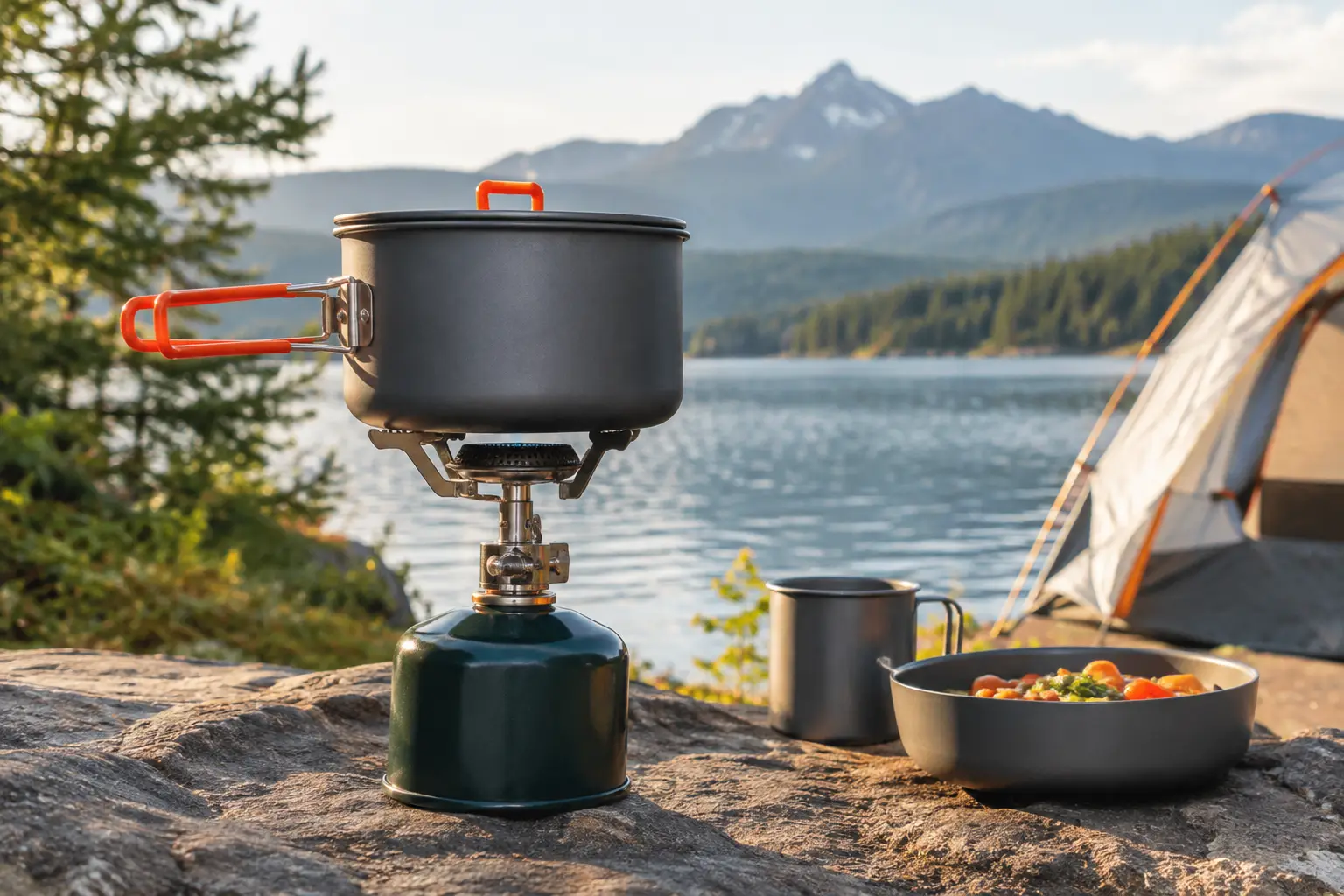
Single-burner stoves are a strong choice for solo campers, hikers, hunters, and anyone building a lightweight cook kit. Many use screw-on isobutane canisters, making them quick to set up and easy to pack. They excel at coffee, dehydrated meals, soup, oatmeal, and one-pot dinners.
Their trade-off is limited workspace and reduced stability with larger cookware. Some models also struggle in steady wind unless you position them carefully behind a natural windbreak. A compact burner is ideal when pack space matters more than cooking a full meal for a group.
Two-burner tabletop stoves
For car camping, family sites, overlanding, and weekend trips, a two-burner propane stove is often the most practical option. Two independently controlled burners let you boil water while cooking eggs, warm a skillet while simmering chili, or make a real dinner without taking turns.
These stoves typically have a wider cooking surface and stronger pot supports than compact backpacking burners. They are also easier to use with larger pots, griddles, and frying pans. The downside is bulk. Even a folding tabletop stove takes up more room in a vehicle than a small single-burner model, and it is not suited to long hikes.
High-output freestanding stoves
High-output stoves are built for bigger cookware, larger groups, and more demanding camp meals. They may use sturdy legs, a stand-alone frame, or a larger propane connection. With enough heat for large pots, these stoves can handle fish fries, boil pots, Dutch oven cooking, and meal prep for a busy campsite.
More power comes with more responsibility. High-output burners use fuel quickly, create intense heat, and need a level, clear cooking area. They are best for established campsites, hunting camps, tailgates, and vehicle-supported outings where cooking capacity matters more than minimal weight.
Wood-burning and multi-fuel options
A wood-burning stove can reduce the need to carry canisters when dry fuel is available. It may appeal to campers who value fuel independence, but it requires time, attention, and local fire-rule awareness. Wet wood, burn bans, and smoky conditions can quickly limit its usefulness.
Multi-fuel stoves offer flexibility by running on more than one fuel type. They can be valuable for extended travel or remote destinations, though they usually require more maintenance and a better understanding of priming, cleaning, and fuel handling. For casual campground cooking, propane or isobutane remains simpler.
Burner Power: BTUs Are Helpful, Not Everything
BTUs describe heat output, and a higher number can mean faster boiling and stronger searing power. That is useful when cooking for several people or working with large cookware. But the highest BTU rating does not automatically make a stove the best choice.
A powerful burner without good flame control can scorch pancakes, burn sauces, and make simmering difficult. Wind can also take away much of a stove's real-world performance. A stove with a protected burner, effective side shields, and a stable flame may cook better at camp than a more powerful stove exposed to every gust.
For basic camp meals, moderate output with dependable adjustment is usually enough. Choose higher output when you regularly cook for groups, use cast iron, or need to bring large volumes of water to a boil. If your menu is coffee and freeze-dried meals, extra burner power may simply mean extra fuel consumption.
Fuel Choices for Camp Cooking
Propane is widely available in the United States, easy to connect, and well suited to two-burner and high-output camp stoves. Small disposable cylinders are convenient for short trips, while larger refillable tanks make sense for extended stays and group cooking. Cold weather can reduce performance, but propane generally remains a dependable choice for vehicle-based camps.
Isobutane canisters are compact and popular with backpackers. They offer clean, simple operation and pack efficiently, especially when paired with a lightweight screw-on burner. Their performance can drop in freezing temperatures, so cold-weather travelers may need a stove and fuel system designed for those conditions.
Liquid fuel can perform well in cold conditions and may be easier to source in some remote travel situations. It also requires more hands-on use. Fuel bottles, maintenance parts, and proper handling add complexity that many casual campers do not need.
Whatever fuel you choose, bring more than your trip plan suggests. Wind, cold, longer cook times, and a second round of coffee can use more fuel than expected. Store cylinders upright and away from high heat, inspect connections before lighting, and never operate a stove inside a tent, vehicle, or enclosed shelter.
Stability, Wind Protection, and Cookware Fit
A camp stove can have great burner output and still be frustrating if the pot support is too narrow for your cookware. Before a trip, set your primary pot or skillet on the stove at home. Check that it sits flat, does not rock, and leaves room to reach the controls safely.
Wind protection deserves the same attention. Many tabletop stoves include folding side panels that help shield the burners. Compact stoves may need thoughtful campsite placement instead. Do not create a tight enclosure around a hot stove, and keep any windscreen positioned according to the stove manufacturer's safety guidance.
Level ground is just as important. A stove on a sloped picnic table, loose tailgate, or uneven rock can turn a simple meal into a spill hazard. Set up on a stable, nonflammable surface and keep handles pointed away from foot traffic.
Choose a Stove for the Way You Camp
A lightweight hiker should prioritize packed weight, compact fuel, and a dependable pot stand. A couple camping from an SUV will likely get more value from a two-burner propane model with room for a skillet and coffee pot. Families, hunting groups, and base-camp cooks may be better served by a high-output stove that handles larger pots without crowding the cooking area.
Also think about your typical menu. If you only boil water, a compact stove is enough. If camp cooking means bacon, pancakes, grilled sandwiches, and a one-pan dinner, burner control and a wider cooking surface deserve priority. A stove should fit the meals you want to make, not force every trip into the same menu.
NorthWest Trail Co makes it easier to build around that decision, whether you need a compact burner for the trail or a larger cooking setup for a comfortable vehicle-based camp.
Before leaving home, test your stove with the cookware and fuel you plan to bring. Learn how the ignition works, confirm the flame adjusts smoothly, and pack a lighter as a backup if the stove uses push-button ignition. A little preparation means dinner stays the easy part of the trip.
