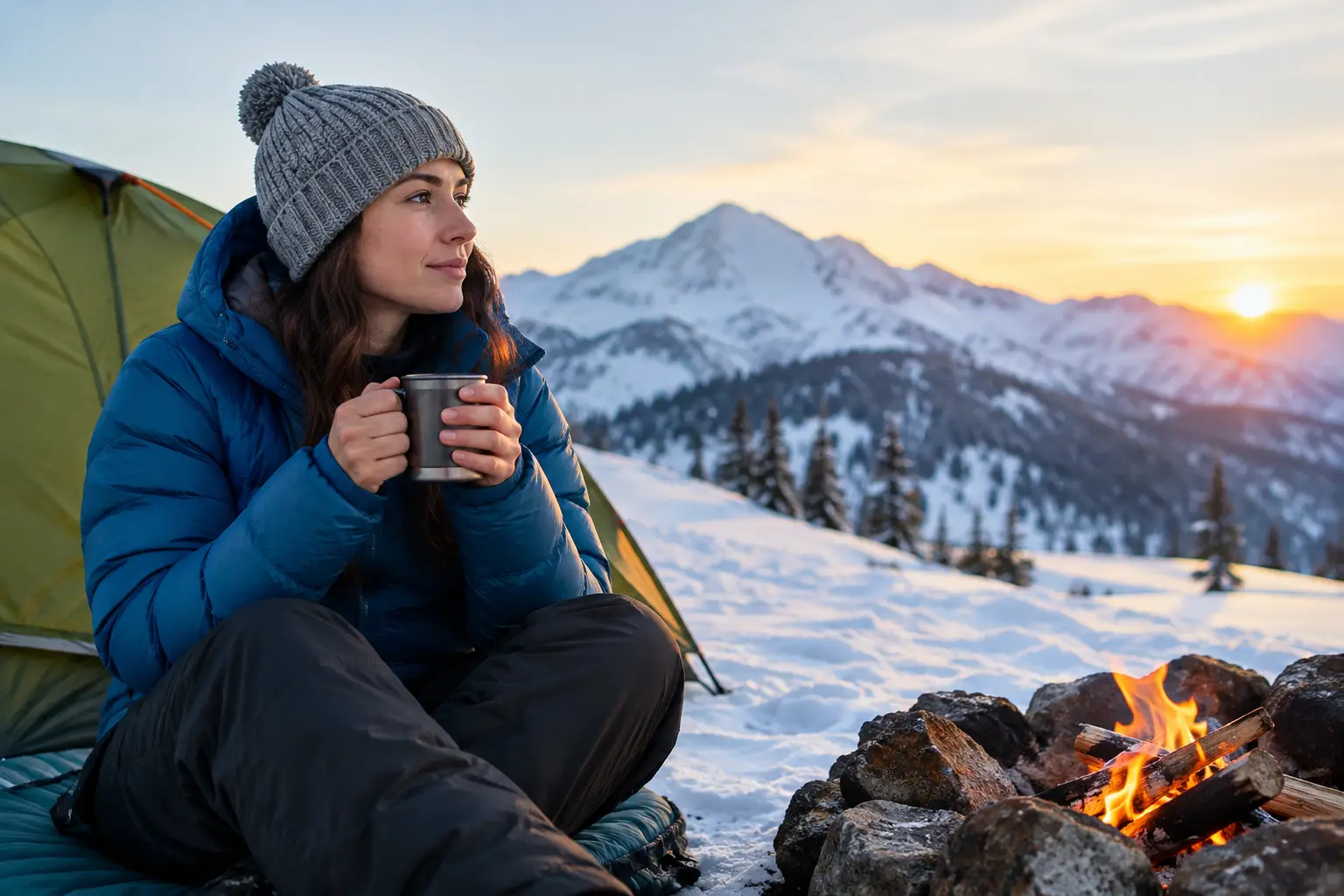
A cold campsite can turn a great trip into a long, sleepless night fast. Knowing how to stay warm camping is less about bringing one oversized jacket and more about managing heat from the moment you leave the trailhead until you crawl into your sleeping bag. Your shelter, sleeping pad, food, clothing, and campsite location all work together.
The goal is not to feel hot. It is to stay dry, protected from wind, and insulated from the ground while keeping enough reserve warmth for the night ahead. That approach works for a family weekend at a drive-in campground, a truck-bed camp setup, or a colder backcountry overnight.
How to Stay Warm Camping Starts Before Dark
The best cold-weather campers make adjustments before they feel chilled. Once you are shivering, it takes more calories, more dry clothing, and more time to get comfortable again.
Start by checking the forecast for the overnight low, wind speed, chance of rain or snow, and expected ground conditions. A listed low of 35°F can feel much colder in exposed wind or damp air. Plan your sleep system for temperatures below the forecast, especially if you sleep cold, are camping with children, or expect wet conditions.
Choose a campsite with natural protection. A spot behind trees, a rise in the terrain, or a rock outcrop can reduce wind exposure. Avoid low pockets and creek bottoms when possible. Cold air settles there overnight, and those places often collect moisture. In rainy weather, do not camp in dry washes or locations that could flood.
Set up shelter early enough to do it carefully. A tent with a fully staked rainfly, closed vents positioned for the conditions, and a footprint beneath the floor gives you a more stable place to sleep. Ventilation may seem counterintuitive when it is cold, but a small amount helps move moist air out. Less condensation means less damp gear and a warmer tent by morning.
Build a Sleep System That Stops Heat Loss
Your sleeping bag gets most of the attention, but your sleeping pad is just as important. The ground pulls body heat away continuously. A quality insulated pad creates the barrier that keeps your sleeping bag insulation from being compressed and ineffective underneath you.
Look at the pad's R-value when choosing cold-weather sleep gear. Higher R-values provide more insulation from the ground. For cool three-season camping, a moderately insulated pad may be enough. Near-freezing temperatures, snow camping, or a naturally cold sleeper may need a higher-R-value pad or two pads layered together, such as a closed-cell foam pad under an inflatable insulated pad.
Match your sleeping bag to the trip rather than its marketing label. A bag rated at 30°F may be uncomfortable at 30°F for many campers, particularly if they are tired, underfed, damp, or wearing too little. Leave a margin. If the low is expected around freezing, many people will be more comfortable in a bag rated closer to 20°F.
A sleeping bag should fit without being restrictive. Too much unused space makes your body work harder to warm the interior, while a bag that is too tight compresses insulation and limits circulation. Mummy bags are typically more heat-efficient, while roomier bags can be more comfortable for car camping when paired with enough insulation.
Before bed, fluff the bag and give the insulation time to loft. Keep it dry at all costs. If you use a quilt, take extra care to seal gaps along the pad and around your shoulders. Drafts are small, but they can pull warmth out of a sleep system all night.
Wear Layers, Not Heavy Sweat
The warmest clothing plan is built around moisture control. Sweating during a steep hike, firewood gathering, or tent setup leaves damp fabric against your skin. When activity stops, that moisture cools quickly.
Start with a moisture-wicking base layer made from wool or synthetic fabric. Add an insulating midlayer such as fleece or a puffy jacket, then use a windproof or waterproof shell when conditions demand it. Cotton is a poor choice for cold, active camping because it holds moisture and loses insulating value when wet.
Keep a completely dry set of clothes for sleeping. That can be as simple as dry socks, long underwear, and a warm beanie stored in a waterproof bag. Do not sleep in the same sweaty clothes you wore hiking unless you have no alternative. Changing before bed is one of the easiest comfort upgrades you can make.
Your head, hands, and feet deserve attention. Wear a beanie or balaclava to bed if needed, but avoid pulling your face deep inside a sleeping bag where breath moisture can build up. Use dry wool or synthetic socks, and do not wear footwear that is tight enough to restrict circulation. If your feet are already cold, do a few light movements before getting into your bag, then let the insulation hold that warmth.
Eat and Drink for Overnight Warmth
Your body needs fuel to produce heat. A warm, calorie-dense dinner is useful before a cold night, especially after a long hike or active day. Think meals with a balance of carbohydrates, protein, and fat rather than a small snack eaten on the move.
Have a warm drink before bed if it fits your routine, but do not overdo fluids late at night. Getting out of a warm sleeping bag repeatedly is uncomfortable, and dehydration is not the answer either. Sip water regularly throughout the day so you arrive at camp hydrated.
Keep tomorrow's breakfast fuel from freezing by storing it where appropriate, and make sure your stove, fuel, lighter, and cooking tools are easy to access. Canister fuel performance drops in cold temperatures. For winter conditions, use a stove and fuel system rated for the expected temperatures, and carry a dependable ignition backup.
A securely sealed hot-water bottle can add warmth inside a sleeping bag. Use a durable bottle designed for hot liquids, confirm the cap is tight, and wrap it in a layer of clothing or a cover to prevent burns. Place it near your core or feet, not directly against bare skin. Never use a bottle that could leak in your bag.
Use Camp Heat Safely
A campfire provides comfort and a place to warm up, but it is not a replacement for proper sleep gear. Once the fire burns down, you still need a tent, pad, bag, and dry clothing that can handle the overnight low.
Build fires only where permitted and use established fire rings when available. Keep extra dry wood protected from rain or snow, and fully extinguish the fire before bed or leaving camp. In high wind, drought, or fire restrictions, plan for no campfire at all.
Portable heaters can make a large tent, canopy, camper, or vehicle-based setup more comfortable, but they require strict attention to manufacturer instructions, clearance requirements, ventilation, and fuel handling. Never use a charcoal grill, camp stove, or fuel-burning heater inside a closed tent, vehicle, or other enclosed space. Carbon monoxide is odorless and can be deadly.
If you use an approved heater in a compatible, ventilated setup, bring a working carbon monoxide detector and do not leave the heater unattended. For backcountry or standard tent camping, invest the effort in a stronger sleep system instead of trying to heat the entire shelter.
Small Habits That Make a Big Difference
Keep essential items inside the tent but organized away from your sleeping area. A headlamp, water bottle, dry socks, and next-day layers should be easy to find without opening the door and letting cold air in. Put damp boots under the vestibule or in a protected bag, not against your sleeping bag where they can add moisture.
Do a quick check before bed: eat something, use the restroom, change into dry layers, fill your water bottle, and close up the shelter. This routine reduces the reasons you will need to leave your warm setup later.
For vehicle and family camping, comfort-oriented equipment can make cold trips far more workable. A truck-bed air mattress with insulated bedding, a larger tent with room for organized gear, portable power for approved low-draw accessories, and a high-output camp stove for hot meals all have a place. The trade-off is bulk and setup time, which matters less at a drive-in site than it does on a backpacking route.
For backpacking, prioritize weight-efficient warmth: an insulated pad, temperature-appropriate bag or quilt, dry sleep layers, a dependable shelter, and a compact stove system. NorthWest Trail Co's category-based selection can help campers build around the problem they need to solve, whether that is ground insulation, weather protection, lighting, or a more comfortable vehicle-camping sleep setup.
Cold weather rewards preparation, but it does not require suffering. Build your system around dry layers, insulation beneath you, a realistic temperature rating, and a campsite that works with the weather. Then you can spend less time watching the thermometer and more time enjoying the quiet part of camp after dark.
