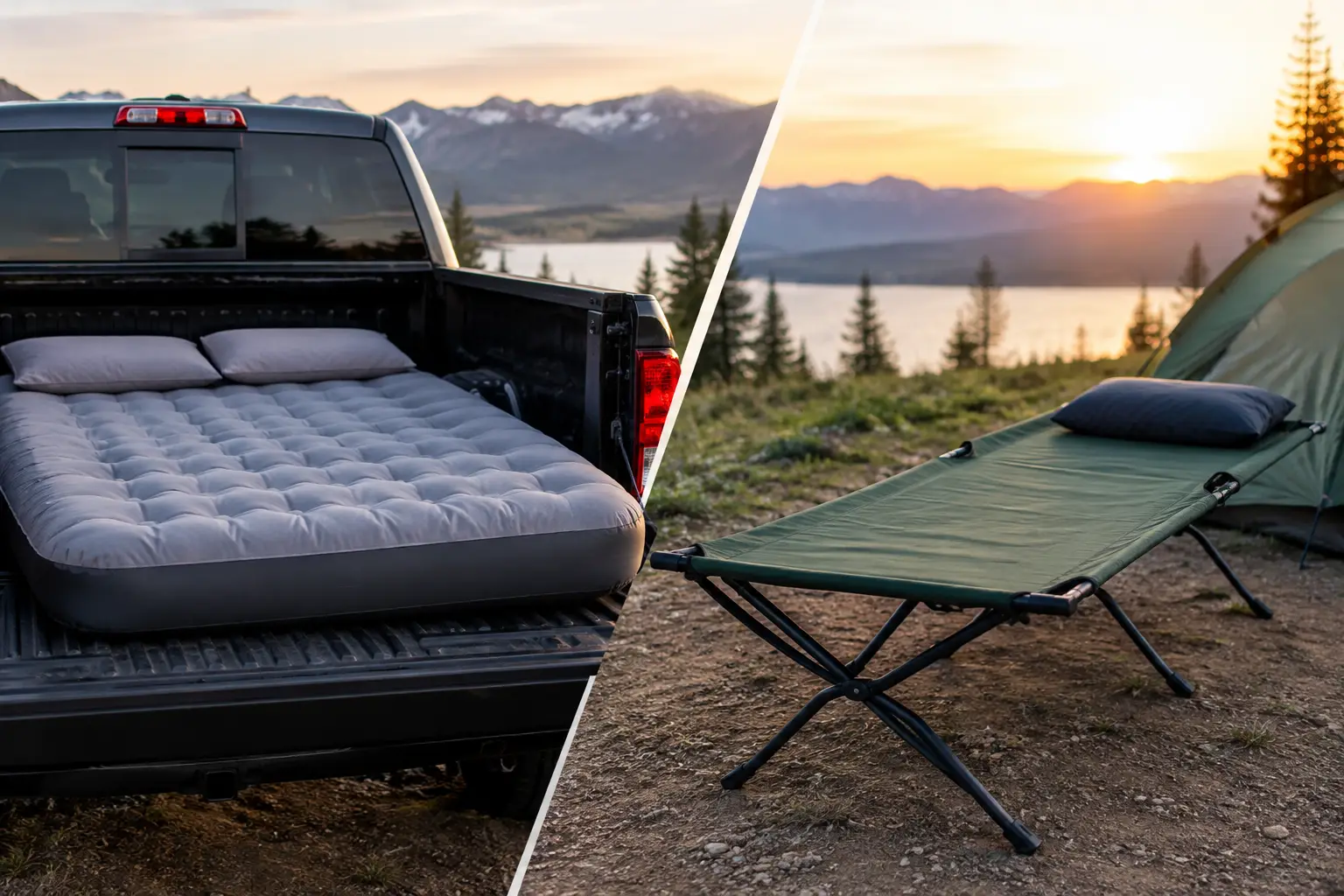
A good campsite can still make for a rough morning if your sleep setup misses the mark. In the truck bed mattress vs cot decision, the better choice is not about which product is tougher or more expensive. It is about where you camp, how much room your truck provides, whether you share the bed, and what you need from camp after a long day outside.
A truck-bed air mattress turns the bed of your pickup into a broad, insulated-feeling sleep platform. A cot lifts you off the ground or truck-bed floor with a compact, supportive frame. Both can make vehicle camping more comfortable than sleeping on a thin pad, but they solve different problems.
Truck Bed Mattress vs Cot: The Practical Difference
The main difference is surface area versus elevation. A truck-bed mattress uses the width and length of the pickup bed to create a familiar, bed-like place to sleep. Many designs include wheel-well cutouts, raised side bolsters, or a tailored shape to make better use of the available space. That makes them especially useful for couples, solo campers who move around at night, and families using the truck as part of a larger campsite.
A cot is a narrower individual bed built on legs. Its biggest advantage is getting your body above cold, uneven, wet, or dusty ground. In a tent, that elevation can be a major comfort upgrade. In a truck bed, though, a cot raises you closer to the bed rails, canopy, or topper ceiling. Before buying one for pickup use, measure the clear interior height with your sleeping bag or quilt in mind.
Neither option is automatically warmer. An air mattress can lose heat to the cold bed floor because air moves heat away from your body. A cot lets cold air circulate underneath it. For shoulder-season or cold-weather camping, add an insulated sleeping pad, blanket, or foam layer on top of either setup. Your sleeping bag temperature rating matters too, but insulation beneath you is what prevents the cold-from-below feeling that wakes many campers at 3 a.m.
When a Truck-Bed Mattress Makes More Sense
Choose a truck-bed mattress when your pickup is your primary sleeping shelter and comfort is high on the list. It is often the better fit for weekend campouts, fishing trips, trailhead overnights, overlanding routes, and road trips where the truck bed stays mostly clear.
The wide surface is the selling point. A full-size pickup bed can give a single sleeper plenty of room for a duffel, jacket, water bottle, and charging gear close at hand. In a longer bed, some couples can sleep side by side without trying to make two narrow cots work. A mattress can also be easier for side sleepers because it spreads pressure across the hips and shoulders instead of concentrating it through a taut cot fabric.
A truck-bed mattress is particularly practical if you have a bed cover, camper shell, or truck-bed tent. Those setups give you weather protection while preserving the mattress's broad, flat sleeping area. You can keep camp chairs, cooking gear, and bins on the ground or under an awning, then climb into a dedicated sleep space at night.
There are trade-offs. Truck-bed mattresses are only useful when the truck is available and empty enough to hold them. If your bed is loaded with recovery equipment, coolers, firewood, or hunting gear, setup may involve moving more items than you want to handle after dark. They also require inflation. A portable pump makes that easy, but it is one more piece of gear to charge, pack, and keep track of.
Fit deserves close attention. Measure the bed length from the cab wall to the closed tailgate, the width between wheel wells, and the usable height under any topper. A mattress made for a short bed may leave taller campers sleeping diagonally or with their feet against the tailgate. If you are close to the listed size limit, choose based on actual measurements rather than the truck model name alone.
Best uses for a truck-bed mattress
A truck-bed mattress is usually the stronger choice for a couple, a side sleeper, or anyone who wants the closest thing to a real bed at camp. It also works well when you camp at established sites, stay multiple nights, or use a pickup with a cover that keeps out dew, wind, and bugs.
It is less ideal for a trip where the bed must haul supplies every day or where you may leave the truck parked away from camp. In those situations, a sleep system that works inside a tent may provide more flexibility.
When a Cot Is the Better Choice
Choose a cot when versatility, quick deployment, and off-ground sleeping matter more than a wide surface. A quality camping cot can move from a tent to a cabin porch, hunting camp, emergency shelter, or shaded area under a canopy. It does not depend on a particular truck-bed shape.
Cots are a smart option for campers who bring a ground tent but do not want to sleep directly on the tent floor. They are also useful for hunters and overlanders who need to keep the truck bed open for equipment. Set up your tent beside the truck, unfold the cot, and leave your gear organized where it belongs.
The elevated design helps on uneven campsites. Small rocks, roots, minor slopes, and damp ground matter far less when your sleeping surface is suspended above them. That said, a cot still needs reasonably level ground. On soft soil, narrow cot feet can sink or shift. Use a groundsheet or wide foot pads if conditions are loose, muddy, or sandy.
Cot comfort varies more than many first-time buyers expect. Frame height, fabric tension, width, and weight capacity all affect how it feels. A narrow cot may be fine for a back sleeper but frustrating for a restless sleeper. Side sleepers often prefer a wider model and may want to add a sleeping pad for pressure relief. Check the stated weight capacity, then leave some margin rather than buying right at the limit.
A cot can also be better in wet conditions because it keeps sleeping gear away from water that sneaks into a tent. It will not fix a leaking shelter, but it can protect your bag and pad from a shallow puddle or condensation along the tent floor.
Best uses for a cot
A cot suits solo campers who use tents, people who need a portable guest bed, and anyone building a flexible emergency or vehicle-camping kit. It is a solid choice when you want one sleep system that works beyond the pickup.
Its limitations show up in confined spaces. Most cots need a tent with enough length, width, and peak height to enter comfortably. In a truck bed, the legs can make loading awkward, and the added height can put you uncomfortably close to a hard tonneau cover or topper roof.
Compare Setup, Storage, and Durability
For setup speed, a folding cot usually wins. Many models unfold in minutes with no pump, no valves, and no need to find a power source. Some compact cots take more assembly, however, especially lightweight designs that use tensioned fabric and separate frame poles. Practice at home before relying on one after sunset.
A truck-bed mattress takes longer to inflate but can be just as simple once you have a reliable pump. Look for durable valves and a material thick enough to handle regular use. Clear the bed first. Sharp screws, splinters, gravel, and exposed cargo hardware can damage an air mattress, so sweep the surface and consider a protective mat underneath.
Storage depends on your vehicle and your trip style. Deflated mattresses pack down well, though they need time to dry completely after humid or rainy trips. Cots store as a long folded bundle or compact carry bag, but their frame remains bulkier and heavier than a rolled-up air mattress. If every cubic inch of cargo room matters, compare packed dimensions, not just sleeping dimensions.
Durability is not simply air mattress versus cot. A well-made mattress can last for years when protected from abrasion and stored dry. A cot can endure repeated setup, but hinges, poles, and fabric must all handle your weight and movement. For either choice, check the warranty terms, material specifications, and included repair or storage accessories.
Make the Choice Around Your Camp Routine
If your truck bed is your bedroom, start with a truck-bed mattress. It makes the best use of the space you already own and gives you a roomy sleep surface after a day on the trail. Add a truck-bed tent or weather cover, a warm sleep system, and a compact light, and your pickup becomes a practical overnight base.
If you need your sleeping setup to work in a tent, at a hunting camp, or during a power outage at home, a cot offers more places to use it. It is also the simpler answer when your truck bed is usually full of gear.
Some campers eventually carry both: a truck-bed mattress for road trips and a cot for tent camping or extra sleepers. That is not overpacking if both pieces solve a real need. Build around the trips you actually take, measure your available space, and choose the sleep system that lets you wake up ready to use the day.
