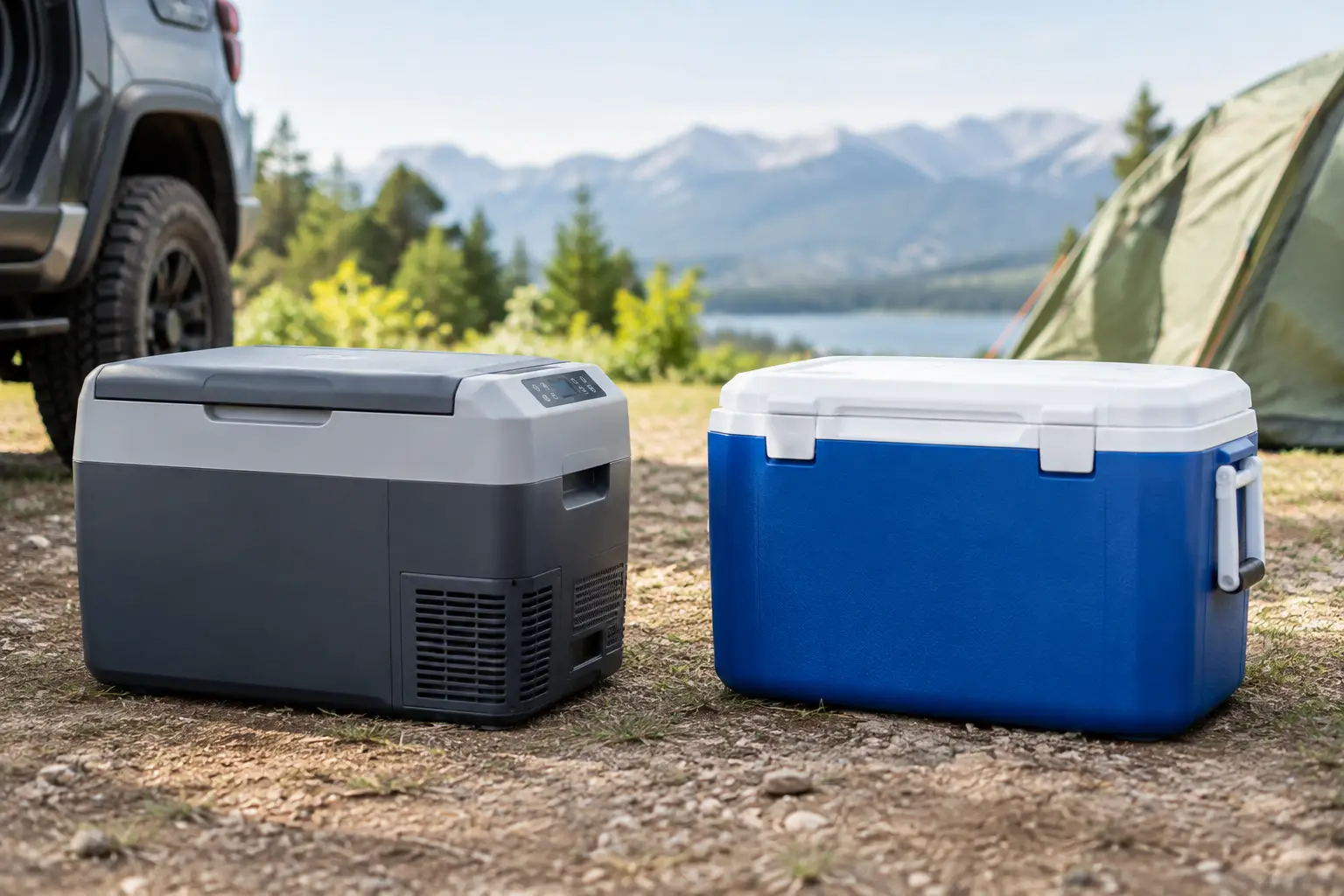
A cooler packed with melting ice can work perfectly for a Saturday at the lake. But when the trip runs through a long weekend, a hunting camp, or several days of overland driving, soggy food and repeated ice runs get old fast. The portable fridge versus ice chest decision comes down to more than keeping drinks cold. It affects your packing plan, power needs, food safety, budget, and how far you can travel from the nearest store.
Both options earn a place in trail life. An ice chest is simple, familiar, and ready to go with no outlet required. A portable fridge provides steady, controlled temperatures and eliminates the daily fight against meltwater. The better choice depends on the way you camp, travel, hunt, or prepare for an emergency.
Portable Fridge Versus Ice Chest: The Main Difference
An ice chest, often called a cooler, keeps food cold by insulating it around ice or ice packs. Its performance depends on the quality of the insulation, outside temperature, how often it is opened, how full it is, and how much ice you start with. Even a well-built cooler gradually warms as the ice melts.
A portable fridge uses a compressor and electrical power to actively cool its contents. Many models can run as either a refrigerator or freezer, allowing you to set a specific temperature rather than hoping the ice lasts. They commonly operate from a vehicle's 12V outlet, AC wall power, a portable power station, or a compatible solar setup.
That active cooling is the biggest dividing line. A fridge gives you temperature control. An ice chest gives you independence from power. Neither advantage matters in every situation, which is why matching the gear to the trip is more useful than choosing based on price alone.
When an Ice Chest Makes More Sense
For short outings, an ice chest remains hard to beat. It has no battery to monitor, no cord to route through a vehicle, and no compressor to protect from hard impacts. Load it with ice, food, and drinks, and it is ready for the truck bed, campsite, boat, tailgate, or beach.
An ice chest is usually the better buy for day trips and one- or two-night camping trips. It also makes sense when your main goal is carrying cold drinks, not preserving temperature-sensitive food. A family car-camping weekend can be handled well with a properly sized cooler, especially if you pre-chill food and use block ice alongside cubed ice.
It is also useful as a backup cold-storage option. Hunters may keep a dedicated cooler for bagged ice, drinks, or game transport. Campers with a portable fridge may still bring a small ice chest for extra beverages, reducing how often the fridge compartment is opened.
The trade-off is ongoing ice use. Ice takes up valuable capacity, adds weight, and eventually turns into water. You need to drain that water, keep food in watertight containers, and plan for resupply if the trip lasts more than a few days. In hot weather, a basic cooler can require more attention than expected.
Choose an Ice Chest If You Need Simple, Low-Cost Cooling
An ice chest is a strong fit if you camp close to home, take weekend trips, have limited vehicle power, or want the lowest upfront cost. It is also the practical option for groups that need a large volume of cold drink storage without adding another electrical load to the setup.
For best results, pre-chill the cooler overnight, freeze some water bottles to use as ice, keep raw meat sealed, and separate drinks from food when possible. Every time the lid opens, warm air enters and ice life drops.
When a Portable Fridge Is Worth It
A portable fridge starts making sense when cold storage needs to stay reliable beyond a couple of days. Road trippers, overlanders, hunters, anglers, RV campers, and families staying at remote sites can avoid searching for ice every day. Instead of rearranging food around melting ice, you can pack meat, dairy, produce, meal prep containers, and drinks in organized zones.
Temperature control is a major benefit. A fridge set near 37 degrees Fahrenheit can keep refrigerated food at a consistent temperature, while a freezer setting can hold frozen meals, bait, or ice packs. This is especially useful in summer, in desert conditions, or when your campsite is hours from a grocery store.
A portable fridge can also reduce food waste. With an ice chest, lettuce gets wet, packaging softens, and food may become questionable if temperatures climb. With a fridge, you can bring more of the groceries you use at home and spend less on convenience meals during the trip.
The upfront cost is higher, and the system needs power planning. But for frequent travelers, the savings from buying less ice and wasting less food can narrow the gap over time. The real value is convenience: your cold storage stays cold while you focus on the route, camp setup, weather, and meals.
Plan the Power Before You Buy
A compressor fridge is only as useful as the power available to run it. In a vehicle, the fridge can operate from a 12V outlet while driving. At camp, it may draw from a portable power station, a deep-cycle battery system, shore power, or solar panels connected to a suitable battery setup.
Check the fridge's stated power draw, voltage compatibility, and battery-protection settings. Low-voltage protection helps prevent the fridge from draining the vehicle's starting battery too far. This feature matters if you plan to park for a night or longer without running the engine.
Power use changes with conditions. A fridge works harder in direct sun, high heat, and poorly ventilated spaces. A packed fridge generally holds temperature better than an empty one, and opening the lid repeatedly adds demand. Place it in shade when possible, leave room around its vents, and secure it so airflow is not blocked by duffel bags or blankets.
Capacity, Weight, and Vehicle Space
Do not compare cooler and fridge capacity by exterior size alone. Ice occupies a meaningful share of an ice chest, so its usable food space can be smaller than it first appears. A portable fridge uses most of its internal volume for food and drinks, but its compressor housing can make its exterior footprint substantial.
For one or two people on a road trip, a compact unit may be enough for several days of groceries. Families, extended camps, and hunting trips may need larger capacity or a fridge-and-cooler combination. Before ordering, measure the cargo area, truck bed, SUV rear hatch, trailer compartment, or roof rack location where the unit will ride.
Weight matters too. A large ice chest becomes heavy once loaded with food and ice. A portable fridge starts heavier because of its mechanical components, then adds the weight of food and possibly a power station. If you will move the unit often, look for sturdy handles, a manageable loaded weight, and a placement plan that does not require lifting it over other gear.
Food Safety and Camp Routine
A fridge has an edge when food safety is the priority. Perishable food should stay cold enough to limit bacterial growth, and a temperature display gives you a clear reference point. That matters when carrying raw meat, dairy products, leftovers, or meals for young children.
An ice chest can still be safe when managed carefully. Keep a thermometer inside, store raw meat at the bottom in sealed packaging, and avoid draining cold water until necessary if it is still helping maintain temperature. Once the ice is mostly gone and the cooler temperature rises, it is time to restock ice or change the meal plan.
Think about your camp routine as well. If everyone reaches into one cooler for drinks all day, food storage warms quickly. A dedicated food fridge or cooler, paired with a separate drink chest, can make both options perform better.
The Practical Choice for Your Trip
Choose an ice chest for casual use, short trips, large drink loads, and situations where power is unavailable or not worth managing. Choose a portable fridge for multi-day travel, remote camping, consistent meal storage, hot-weather trips, and vehicle-based setups with dependable battery or solar power.
For many campers, the best answer is not strictly one or the other. A portable fridge can protect the food you depend on, while an ice chest handles drinks, extra ice, and overflow. That combination is especially useful for family camps, long drives, and basecamps where people are constantly coming and going.
Build your cold-storage setup around the trips you actually take, not the trips you imagine taking once a year. The right choice is the one that keeps food safe, fits your vehicle, and leaves you with more time around the fire and less time hunting for another bag of ice.
