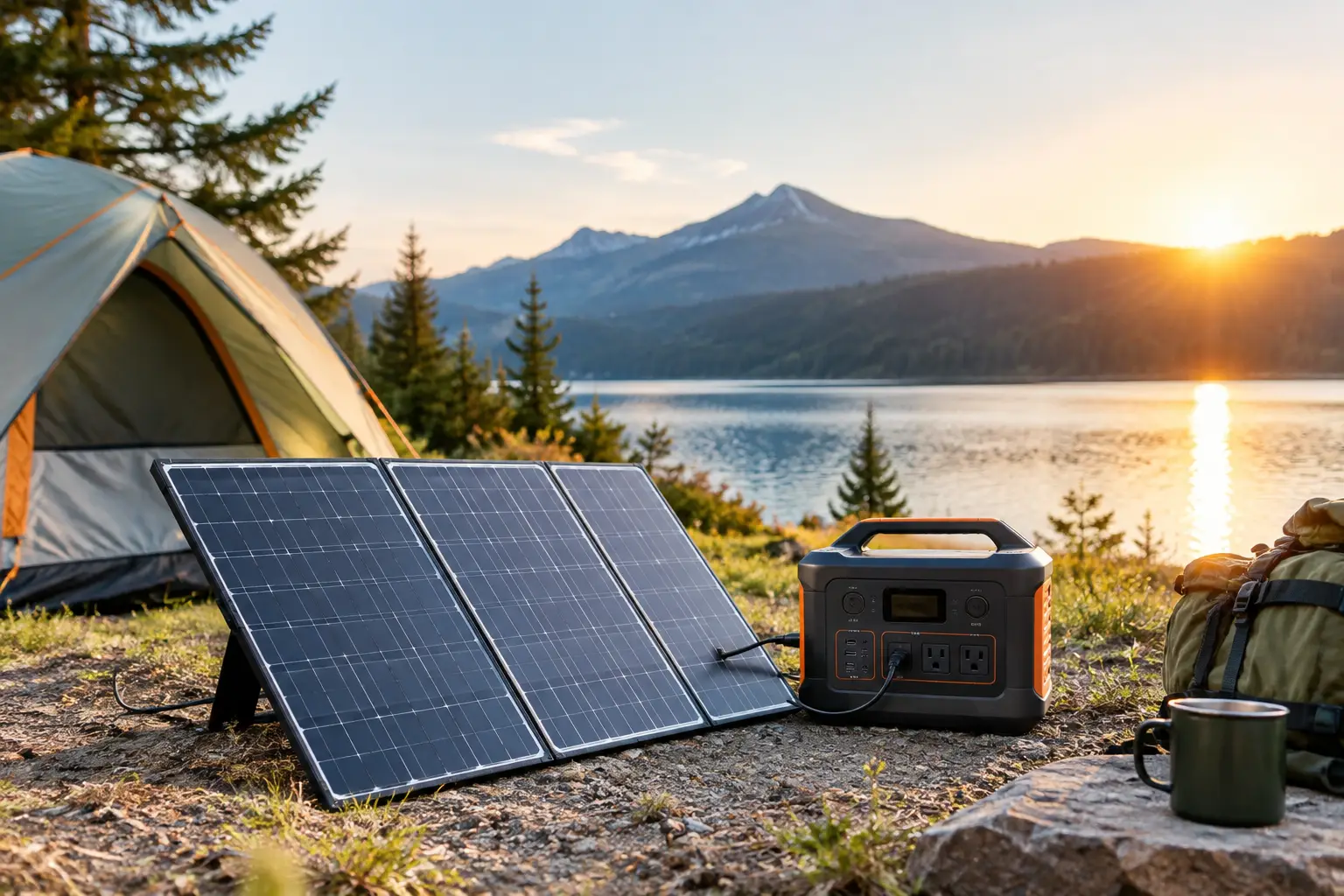
A dead phone is inconvenient at camp. A dead cooler, medical device, GPS battery, or weather radio can be a real problem. That is why many campers ask, are solar generators worth it? For the right trip, they can replace noisy gas generators and keep essential gear running without carrying fuel. For others, a basic power bank or vehicle charger is the smarter buy.
The value comes down to what you need to power, how long you will be away from an outlet, and how much sun you can realistically expect. A solar generator is not unlimited electricity in a box. It is a portable battery power station paired with solar panels, and its capacity and charging speed matter more than the label.
What a Solar Generator Actually Does
Most portable solar generator setups have two parts: a lithium battery power station with AC outlets, USB ports, and 12V outputs, plus one or more foldable solar panels. The panels collect sunlight, and the power station stores that energy for use after dark or during cloudy weather.
Unlike a gasoline generator, it does not burn fuel or need oil changes. It runs quietly, produces no exhaust at the campsite, and can be used inside a tent vestibule, camper, or home during an outage when the unit itself has proper ventilation and stays dry. The trade-off is lower output for the money and slower recharging when conditions are poor.
A solar generator is especially useful when you need dependable power over several days but want to avoid running a vehicle or a loud engine. Think base camps, truck-bed camping, family sites, hunting camps, overlanding routes, and storm preparation at home.
Are Solar Generators Worth It for Your Trip?
They are usually worth it for campers who use power regularly and stay out long enough to recharge with the sun. A weekend tent camper charging two phones and a headlamp may get by with a compact 10,000 to 20,000 mAh battery bank. Carrying a large power station and panel can add cost, weight, setup time, and bulk with little practical return.
The math changes when your campsite includes a powered cooler, CPAP machine, camera batteries, laptop, drone, electric blanket, portable fan, lights, or a small projector. In those cases, a power station gives you more flexibility than scattered battery banks. Add solar panels, and you can replenish some or all of what you use instead of starting every trip with a fixed battery reserve.
They also make sense for people who take frequent road trips. A power station can charge from a wall outlet before departure, from a vehicle's 12V outlet while driving, and from solar panels once you are parked. That combination is useful when campgrounds have no hookups or when you want to keep a cooler cold away from your vehicle.
For backpacking, most solar generators are not worth the pack weight. A lightweight power bank and a small solar panel, if needed, are more practical. Reserve larger stations for car camping, RV travel, work sites, emergency kits, and fixed base camps.
Start With Watt-Hours, Not Marketing Claims
Capacity is measured in watt-hours, or Wh. This is the most useful number for estimating what a power station can do. A 500Wh unit theoretically stores 500 watts for one hour, 50 watts for 10 hours, or 10 watts for 50 hours. Real-world results are lower because energy is lost when the station converts battery power to AC power and because devices do not always draw electricity at a perfectly steady rate.
A phone may use roughly 10 to 20Wh for a full charge. A 10W LED lantern can run for many hours. A 45W laptop charger, a 60W portable refrigerator, or a 40W CPAP machine will use capacity much faster. Heating devices are in a different class altogether. An electric kettle, space heater, hair dryer, or full-size coffee maker can drain a small station quickly and may exceed its inverter rating.
Check two specifications before buying. First, look at battery capacity in watt-hours. Second, check continuous AC output in watts. A station may store enough energy for a device but still be unable to start or run it if the outlet output is too low.
A compact 250Wh to 300Wh station is a practical range for lights, phones, GPS units, cameras, and occasional laptop charging. Around 500Wh to 1,000Wh offers more room for a portable fridge, CPAP, multiple devices, and several nights of camp use. Larger systems are better for extended vehicle camping and household backup, but portability drops quickly as capacity rises.
Solar Charging Is Useful, Not Instant
A solar panel's watt rating describes its potential output under ideal test conditions. A 100W panel rarely produces 100W all day in the field. Angle, shade, temperature, cloud cover, panel cleanliness, and the station's input limit all affect charging speed.
As a practical example, a 500Wh power station paired with a 100W panel may need most of a good sunny day to recharge substantially. A larger panel array can shorten that time, but only if the power station accepts the extra input. If the station can take 200W of solar input, connecting 400W of panels will not make it charge at 400W.
This does not make solar charging a gimmick. It simply means you should plan around your daily energy use. If your refrigerator uses 300Wh per day and your solar setup brings in 350Wh on a sunny day, you can maintain the battery level reasonably well. If your gear uses 800Wh daily, a small panel will not keep pace.
Shade is the biggest campsite problem. A tree-lined site may be ideal for sleeping but poor for panel output. Place panels where they receive direct sun, use longer compatible cables when necessary, and move them during the day if you want the strongest charge. Never leave valuable panels unattended in a busy campground.
Costs and Trade-Offs to Consider
A solar generator can be a significant purchase, especially once panels are included. The payoff is strongest when it replaces repeated expenses or solves a problem you encounter often. If you only need emergency phone charging once or twice a year, a basic battery bank is more cost-effective. If you regularly buy ice for a cooler, book electric campsites for charging access, or run a gas generator during multi-day trips, a power station can earn its place.
There are other trade-offs. Battery stations are quiet, but they are not weightless. A larger unit may weigh 25 to 50 pounds or more. Panels need space in the vehicle and time to deploy. Lithium batteries also need sensible storage: keep them away from extreme heat, avoid storing them fully depleted for long periods, and follow the manufacturer's charging guidance.
Cold weather deserves extra attention. Batteries deliver less usable power in freezing conditions, and many lithium stations should not be charged below their specified temperature range. Keep the unit insulated from direct cold when possible, but do not block cooling vents while it is running.
A Practical Buying Approach
Before choosing a station, make a short list of the devices you actually bring. Find each device's wattage on its label or charger, estimate how many hours you use it per day, and multiply watts by hours. That gives you a workable daily watt-hour estimate. Add a buffer for conversion losses, unexpected charging, and less-than-perfect weather.
Then match the station to the way you travel. For a two-night family campsite, prioritize enough battery capacity to run essentials without depending on sun. For weeklong vehicle-based travel, prioritize solar input, compatible panel wattage, and charging options from the vehicle. For emergency readiness, consider a unit with enough AC output for the appliances or medical equipment you may need, rather than one built only for USB charging.
Useful features include a clear battery display, regulated 12V output for compatible coolers, enough USB-C power delivery for modern laptops, pass-through charging if you need it, and a durable panel stand or kickstand. Do not pay extra for outlets you will never use. A well-matched 500Wh station is more useful than an oversized unit that stays home because it is too heavy to pack.
When the Answer Is No
Solar generators are not automatically better than every other option. If your only need is charging a phone on an overnight hike, choose a power bank. If you need to run high-draw appliances for long periods, shore power, a vehicle alternator system, or a properly operated fuel generator may be more realistic. If you camp under dense trees for days, bring enough stored battery capacity to cover the trip rather than counting on solar production.
The best setup is the one that meets your real power needs without turning camp into a tangle of expensive gear. Start with the essentials, size for the conditions you expect, and leave room in your plan for cloudy skies.
