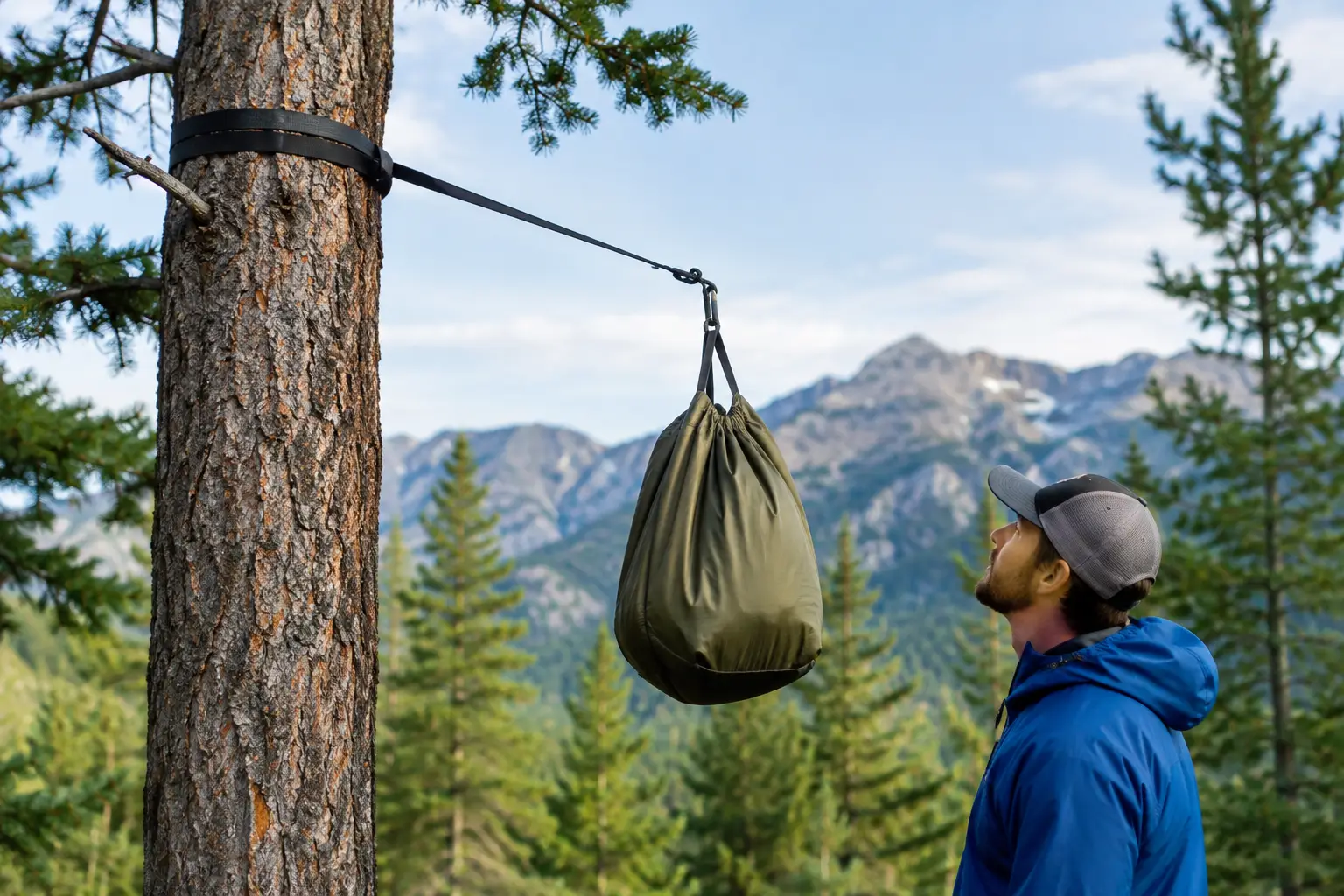
A bear bag is not just a bag of dinner hanging in a tree. It is the barrier between wildlife and every scented item in your camp - including tomorrow’s breakfast, toothpaste, trash, cookware residue, and that snack wrapper from your jacket pocket. If you came here asking “how to hang bear bag,” the goal is simple: keep food high enough, far enough from the trunk, and secure enough that a bear cannot reach, climb to, or pull it down.
A good hang takes a little practice. It also depends on where you camp. Some parks and wilderness areas require an approved bear-resistant canister or storage locker, even if you know how to hang a bear bag well. Check local rules before packing, then use the method below when a hang is permitted, and the trees make it possible.
Start With the Right Bear Bag Setup
A workable food-storage kit is compact, but every piece matters. Use a durable food bag or dry bag, 50 to 75 feet of slick cord, a small throw sack, and a lightweight carabiner. A reflective cord can make the line easier to find after dark, while a bright throw sack is easier to spot when it lands in brush.
Avoid relying on ordinary cotton rope, which soaks up water and can be difficult to pull over a branch. Thick paracord is tough, but it is often heavier than needed and can bind on rough bark. A dedicated 2 to 3 mm bear-bag cord usually packs smaller, throws cleaner, and slides more easily. Wear gloves if your cord is narrow or you are hauling a heavy bag.
A bear bag is not automatically bear-proof. Its purpose is to place food where animals cannot access it, not to withstand chewing or crushing on the ground. Pack all scented items into the bag before you start: food, trash, toiletries, lip balm, medication with odors, pet food, dishes, stove-cleaning supplies, and used wipes. Keep only what you need overnight, such as a water bottle and unscented essentials, in your shelter.
How to Hang a Bear Bag With the PCT Method
The Pacific Crest Trail, or PCT, hang is a practical method because it leaves no long rope tail for an animal to grab. It is more secure than simply tying a bag to one end of a line and wrapping the other end around a nearby trunk.
1. Find a branch that can do the job
Look for a live, sturdy branch at least 15 to 20 feet above the ground. The branch should extend well away from the trunk. Your finished bag should hang at least 12 feet above the ground and about 6 feet below the branch, while staying roughly 4 feet from the trunk and other branches. Those measurements are targets, not magic numbers, but they explain the challenge: a bear should not be able to stand beneath it, climb the trunk to it, or reach it from a side limb.
Choose a spot 100 yards or more downwind from your sleeping area when terrain allows. Do not hang food directly over your tent, a trail, water source, or another camper’s site. If a throw goes wrong, you do not want a loaded bag falling onto someone or into a creek.
2. Get the cord over the branch
Tie the throw sack to one end of your cord. Stand back far enough that you are throwing upward, not straight into the trunk. Toss over the selected limb so both ends of the cord reach the ground. It may take several tries, especially with a high branch. That is normal.
Do not force a poor tree into becoming a food-storage tree. If every branch is too low, too close to the trunk, dead, or tangled, move campsites if practical or use the food-storage option required for that area. A quick, low hang is worse than no plan because it teaches wildlife that campsites are easy meals.
3. Attach the food bag and raise it
Remove the throw sack. Clip your packed food bag to a carabiner, then clip the carabiner around the cord so it can slide along the line. Pull the free end of the cord to raise the bag toward the branch.
Before it reaches the limb, stop and inspect the route. The bag should not snag on bark, rub against a smaller branch, or hang close enough to the trunk that a climbing animal can reach it. Reposition now if the angle is wrong. Once the bag is loaded, your choices get more limited.
4. Set the PCT toggle
When the bag is near the branch, tie a short, sturdy stick to the free end of the cord with a clove hitch. The stick should be longer than the carabiner opening and strong enough not to snap under the bag’s weight. Pull the cord again until the stick rises to the carabiner. The stick catches against the carabiner and holds the bag suspended below the branch.
The remaining cord should not hang within easy reach. The stick-and-carabiner connection is what makes the method useful: there is no rope tied low around a tree for a bear, raccoon, or clever rodent to work with. To retrieve your food in the morning, use a long stick to push the toggle up and release the carabiner, then lower the bag under control.
Practice this system at home before your trip. A backyard session lets you learn the throw, the knot, and the retrieval without doing it by headlamp when rain is moving in.
Check the Hang Before Walking Away
Step back and view the setup from several angles. If you can see an easy path from the trunk or a neighboring branch to the bag, start over. Bears can climb, reach, shake limbs, and stand taller than most campers expect. Squirrels and mice are also persistent, and they can chew through lightweight fabric if the bag rests against rough bark.
Keep camp clean while the bag is up. Cook and eat away from your tent, wipe up spills, and do not leave a cooler, snack bag, or scented trash inside your shelter. If you used the same shirt while cooking, do not make it your sleep shirt. These habits reduce odor around camp even when your food storage is solid.
Weather can change the equation. Wet cord tightens, wind can swing a bag into reach of branches, and snow can create a higher platform beneath your hang. Recheck the bag if conditions shift overnight or if you hear repeated movement around camp. Never approach wildlife to defend food. Make noise from a safe location, follow local guidance, and report aggressive or food-conditioned animal behavior to the land manager.
When a Bear Bag Is Not the Best Choice
Bear bags are useful in many forested areas, but they are not the universal answer. Above treeline, in desert terrain, or in dense young forest, there may be no branch that meets safe spacing requirements. In heavily used bear country, agencies may require hard-sided bear-resistant canisters because a proper hang is difficult to achieve consistently.
Canisters add weight and take up pack space, but they work where trees do not. Bear-resistant panniers, cable systems, and campground storage lockers can also be the right choice depending on the location. For vehicle camping, store food in the designated locker when available or inside a secured vehicle where regulations permit it. Do not assume a tent, soft cooler, truck bed, or screened shelter is secure food storage.
A dependable camp starts before you pitch the tent. Pack your food system with the same care you give your shelter, water treatment, and emergency gear, then choose the storage method that matches the regulations and the terrain. A clean campsite and a well-placed bear bag help keep your trip safer - and help keep wildlife wild.
