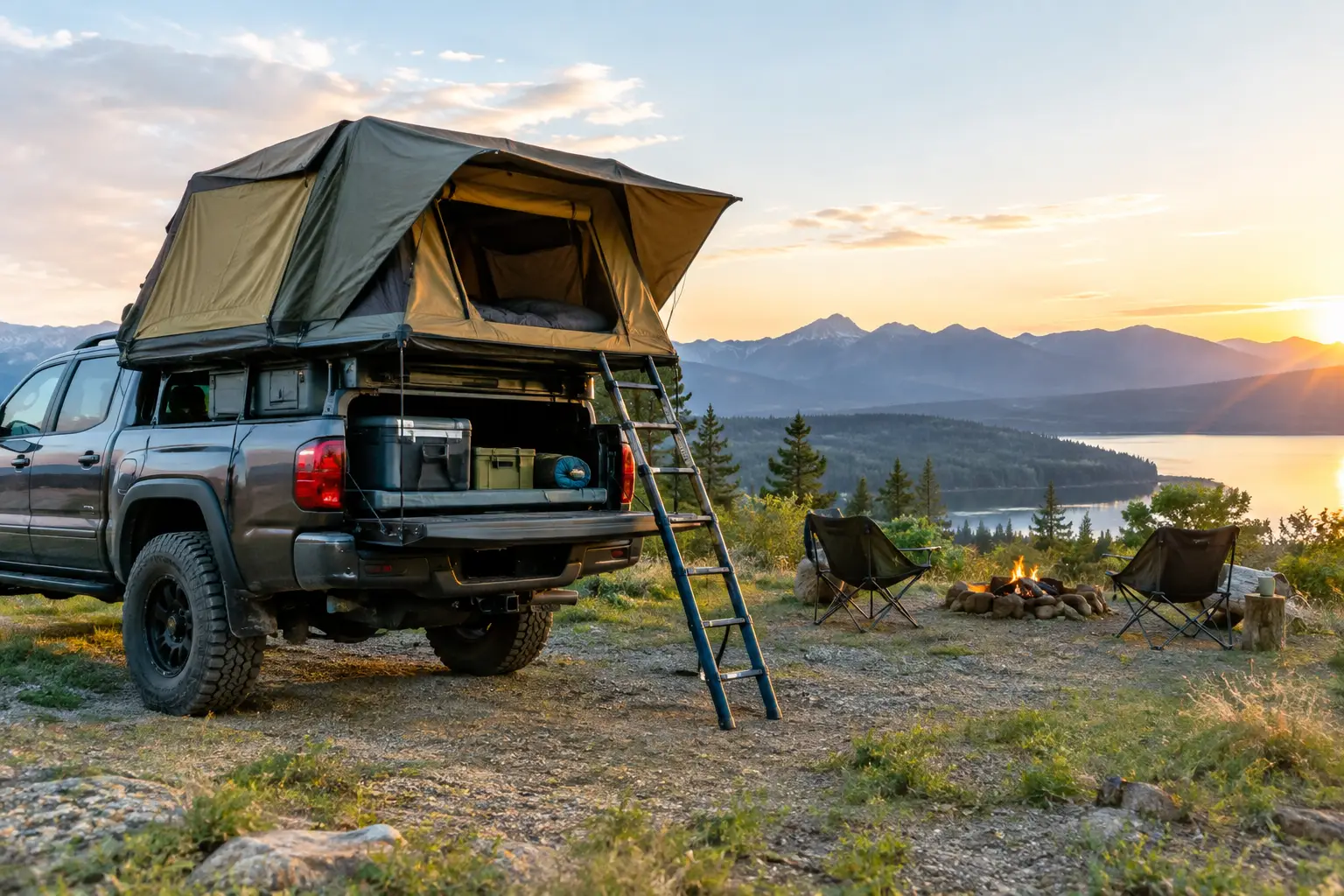
A truck can turn a Friday afternoon into a real overnight trip without the trailer, campground reservation, or complicated setup. Load your sleep system, food, water, and essentials, then park where overnight use is permitted. That is the appeal of truck camping: more comfort and carrying capacity than backpacking, with less bulk and commitment than towing a camper.
The best setup is not necessarily the one with the most gear. It is the one that fits your truck, the season, the number of people traveling, and the kind of places you plan to camp. A warm, organized bed and a few dependable systems will do more for a good night outside than a truck packed wall to wall with accessories.
Start With the Right Truck Camping Sleep Setup
Your sleeping arrangement drives nearly every other decision. A pickup with a covered bed, topper, or cap can provide a protected sleeping platform with room for gear underneath or alongside it. An open-bed pickup can work well with a truck-bed tent, which adds weather protection and keeps you elevated above wet or uneven ground.
Before buying a mattress or tent, measure the usable space, not just the advertised bed length. Wheel wells, bed covers, toolboxes, and tailgate position all affect the room available for sleeping. A full-size air mattress may be comfortable, but it is not useful if it leaves no space to open the tailgate or store the gear you need overnight.
A truck-bed air mattress is a practical choice for many weekend campers because it packs down small and softens the hard bed surface. Look for a shape that works around wheel wells and a pump that can run from your vehicle or a portable power station. For colder weather, add insulation beneath the mattress. Air alone does not retain body heat well, and the metal bed below can pull warmth away quickly.
Your sleeping bag should match the forecast, not the average temperature at home. A cool desert night, mountain campground, or late-season hunting trip can feel much colder than expected. Pair the bag with a pillow, warm socks, and a simple blanket for flexible layering. If two people are sharing the truck bed, confirm that both the mattress width and sleeping bags fit before leaving the driveway.
Shelter Depends on Weather and Access
A truck cap offers fast shelter, security, and reliable wind protection. It also limits headroom, especially in shorter-bed trucks. A truck-bed tent creates more usable interior space and can be a smart option for campers who want to stand up or change clothes without crouching. The trade-off is setup time and greater exposure to wind.
For mild, dry trips, a simple awning or tarp can expand your living space around the tailgate. It gives you a place to cook, sit, and organize without bringing dirt into the sleeping area. Secure it properly with stakes, straps, or weighted anchors. A loose tarp in a gust can damage gear, scratch a vehicle, or become a hazard in camp.
Do not depend on your truck’s cab as your only storm plan. If rain is likely, make sure your bedding is protected from leaks and wind-driven moisture. Keep one dry layer of clothing in a sealed bag or storage bin. If conditions turn severe, know where you can safely relocate rather than trying to ride out dangerous weather in an exposed area.
Organize the Bed So Camp Works After Dark
Truck beds invite overpacking because there is room for nearly everything. The downside appears after sunset, when the headlamp is on and the one item you need is under a pile of chairs, jackets, and cookware. Divide gear by job and give each group a consistent place.
Keep sleep gear toward the cab or inside the covered portion of the bed. Place cooking equipment, water, and a cooler close to the tailgate for easy access. Recovery gear, tools, and emergency supplies should remain available without unloading camp. Durable storage bins are useful because they keep gear dry, stack securely, and double as a clean surface for food prep.
A simple system also protects your truck. Use non-slip mats, tie-down straps, or cargo nets to prevent bins and coolers from shifting during travel. Heavy items should sit low and forward when possible. A hard stop on a forest road can turn an unsecured stove or power station into a problem quickly.
For a family truck camping trip, assign each person a compact bag for clothing and personal items. That reduces loose gear in the bed and makes mornings faster. For solo trips, the same principle still applies: fewer loose items means less time searching and more time outside.
Build a Safe Power and Lighting Plan
Vehicle-based camping makes portable power especially useful, but it does not remove the need for power management. Your truck’s starter battery is meant to start the engine. Running lights, fans, chargers, or a cooler from it for long periods can leave you with a dead battery when it is time to go home.
A portable power station gives you a separate source for low-draw devices such as phones, headlamps, small fans, camera batteries, and select camp lighting. Check the watt-hours, output ports, and recharge options before choosing one. A larger capacity unit offers more runtime, but it adds cost, weight, and space. For a one-night trip, a compact unit may be enough. Multi-day camping with a powered cooler or air conditioner requires much more capacity and careful calculations.
Use lighting in layers. A headlamp handles setup, cooking, and trips away from camp. A lantern makes the tailgate or table easier to use. Low, warm camp lights create a comfortable area without blasting bright light into neighboring sites. Keep a backup flashlight where you can reach it from your sleeping area.
Never run a fuel-burning generator, stove, heater, or grill inside a truck bed tent, topper, cap, or enclosed vehicle. Carbon monoxide is odorless and dangerous. Battery-powered fans and electric blankets may be useful within their rated limits, but combustion equipment belongs outdoors in open, ventilated space.
Cook at the Tailgate, Not in the Sleeping Area
The tailgate is one of the most useful parts of a truck camping setup. It can serve as a cook station, food-prep surface, and gear bench. Keep a camp stove on a stable table or a level, heat-safe surface away from dry grass, vehicle fuel, and fabric walls.
Plan meals that match the trip. A high-output camp stove is useful for groups, colder conditions, and meals that need more than a quick boil. For a short overnight, a compact stove, cooler, water container, and simple cookware may be all you need. Prepping ingredients at home saves time, reduces waste, and keeps food storage easier.
Carry more water than you expect to drink. Water supports cooking, cleanup, pets, and unexpected delays. In remote areas, bring a treatment method as backup; do not assume every creek or lake is safe to use. Follow local fire restrictions, store food securely, and pack out every scrap of trash.
Choose a Camp Spot With the Morning in Mind
A good parking spot is more than a flat place to sleep. Check for overhead branches, muddy ground, flood-prone washes, loose rocks, and signs that another vehicle may need access. On public land, confirm the rules for dispersed camping, vehicle travel, fires, and length of stay. On private property or business parking areas, get permission rather than assuming overnight parking is allowed.
Think about sunrise before you set up. Parking the truck so the morning sun hits the cab or bed can make a cold start more comfortable. In hot weather, afternoon shade matters more. Avoid low spots where cold air settles, and position the truck as level as possible. Even a slight tilt can make sleeping uncomfortable and cause cooler lids, storage bins, or cooking gear to slide.
Keep your keys, phone, and footwear in the same spot every night. It is a small habit that pays off when you need to move quickly, hear wildlife outside, or wake before daylight.
Pack for Comfort, Then Test at Home
The most useful truck camping upgrades solve problems you have actually encountered: a better sleep pad for sore hips, a storage bin for wet gear, a stronger lantern for late arrivals, or a power station that keeps essential devices charged. Start with the basics and test the setup in your driveway or on a nearby overnight trip before committing to a longer route.
NorthWest Trail Co makes it easier to build that system in one place, from truck-bed comfort and camp cooking gear to lighting, hydration, navigation, and portable power. Choose equipment based on fit, capacity, weather rating, and the job it needs to do.
A well-packed truck gives you the freedom to leave when the forecast looks good, take the scenic road, and make camp without turning the trip into a logistics project. Keep the setup simple enough that you will use it often - then let the next open weekend decide the destination.
