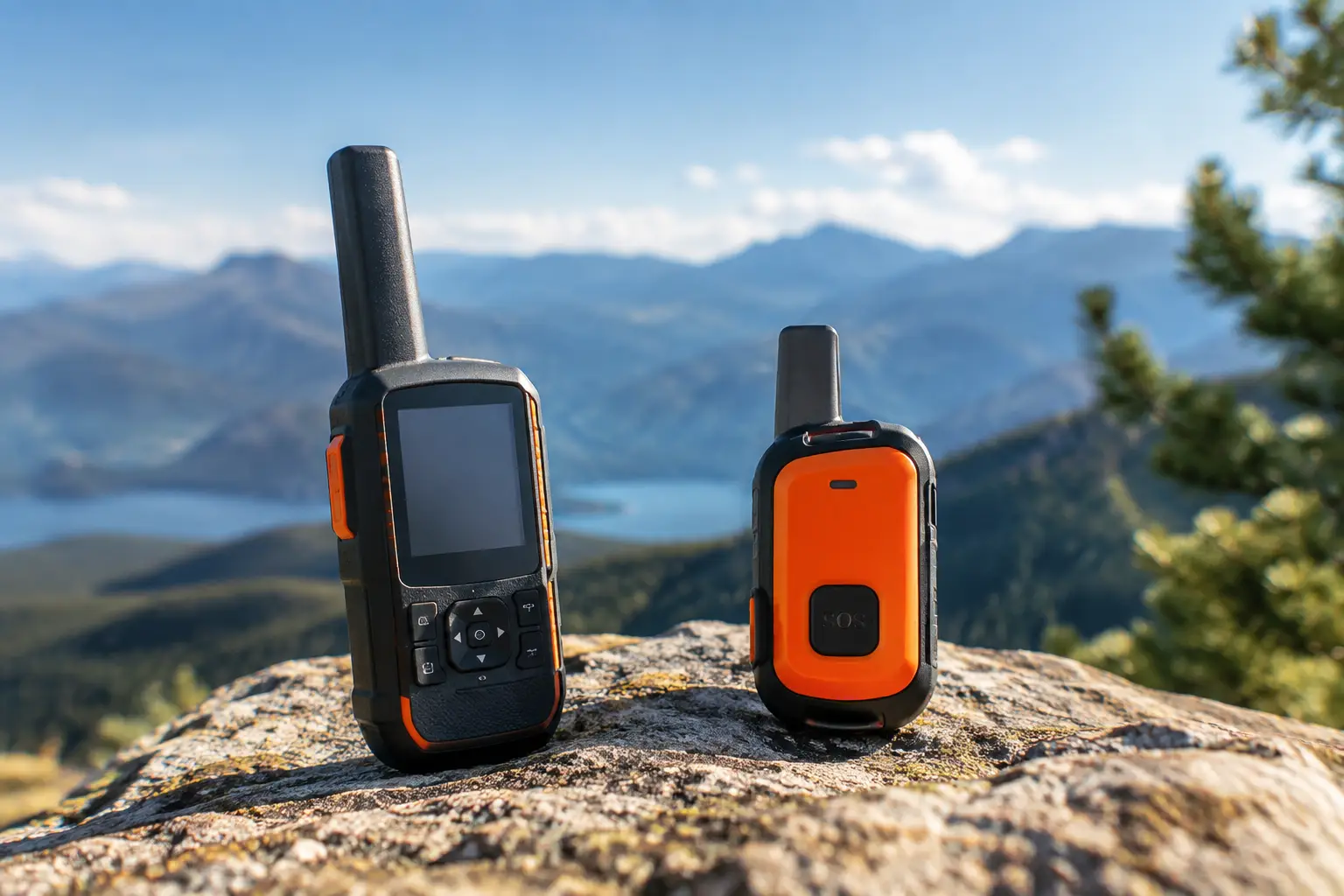
A dead phone battery is inconvenient at camp. A dead phone battery six miles from the trailhead, after a bad fall or sudden weather change, is a different problem. The satellite messenger vs personal locator decision comes down to what you need your emergency device to do before help is required, not just when things have already gone wrong.
For many outdoor trips, either device can provide a critical way to call for rescue beyond cellular coverage. But they work differently, carry different ongoing costs, and suit different kinds of travelers. A weekend hiker who wants a simple last-resort SOS device may choose differently than an overlander who wants family check-ins, weather updates, and location sharing every day of a route.
Satellite Messenger vs Personal Locator: The Main Difference
A personal locator beacon, usually called a PLB, is built for one primary job: sending a distress signal in a life-threatening emergency. When activated, a PLB transmits on the international 406 MHz distress frequency to a government-supported search-and-rescue network. It also typically sends a 121.5 MHz homing signal that helps rescue crews locate you after they are in the area.
A satellite messenger uses a commercial satellite network. It can send an SOS alert to an emergency response center, but most models also offer two-way text messaging, tracking, location sharing, and sometimes weather information. Those extra features make it useful during a normal trip as well as during an emergency.
The simple version is this: a PLB is a dedicated emergency beacon, while a satellite messenger is a communication and tracking tool with an SOS feature. Neither is automatically better. The right choice depends on how you travel, who needs to know your plans, and whether you are willing to manage a subscription.
When a Personal Locator Beacon Makes More Sense
A PLB is a strong fit when your priority is a dependable, no-frills emergency signal. It is especially practical for hikers, hunters, paddlers, backcountry skiers, and anglers who spend long stretches outside cell service but do not need regular contact with people at home.
Most PLBs have no monthly service plan. You buy the unit, register it with the appropriate US authority, keep its registration current, and replace the battery according to the manufacturer's schedule. That lower long-term cost is a major advantage for someone who takes a few remote trips each year.
PLBs are also designed around emergency use. Their batteries are generally made to provide long operating time after activation, often around 24 hours or more at cold temperatures, depending on the model. They are typically waterproof, compact, and simple to operate under stress. In a genuine emergency, fewer menus and fewer choices can be a benefit.
The trade-off is limited information. A PLB generally tells rescuers that you need help and where you are, but it does not let you explain whether the emergency involves a broken leg, a medical condition, dangerous weather, or an overdue party. Your emergency contacts may be notified through the rescue process, but they will not receive casual check-in messages from the trail.
A PLB is best for the person who says, “I want a serious emergency tool that stays in my pack and does not create another subscription.” It is also a sensible backup for remote trips where you want a dedicated distress device separate from your phone.
When a Satellite Messenger Is Worth the Extra Cost
A satellite messenger earns its place when communication matters before an emergency. You can send a quick check-in from a ridge, tell family your camp location changed, coordinate a pickup after a delayed hike, or let a contact know that you are safe but moving slowly. For solo travelers, that routine communication can reduce worry on both ends.
Two-way messaging also gives rescuers more context after an SOS is sent. If you can communicate, you may be able to share the nature of the injury, how many people are in your group, available shelter, weather conditions, and whether anyone needs immediate medical care. That information can help emergency coordinators make better decisions.
Tracking is another useful feature. Depending on the device and plan, it can send location points at set intervals so designated contacts can follow your route. This is valuable for long-distance backpacking, hunting trips in unfamiliar terrain, off-road travel, and multi-day paddling routes. It is not a substitute for leaving a trip plan, but it gives your contact more current information if plans change.
The cost is the main compromise. Satellite messengers normally require an active service plan for SOS and messaging functions. Plans can vary by activation fees, monthly rate, included messages, tracking intervals, and overage charges. Review those details before buying, especially if you only travel a few times per year.
Battery management matters, too. A messenger may run for days or weeks depending on tracking settings, message use, temperature, and model, but it is still an electronic device you need to charge or power. For vehicle camping and overlanding, a power bank or solar power station can make this easy. For a lightweight backpacking trip, battery capacity and device weight deserve closer attention.
Coverage Is Not the Same as a Guarantee
Both devices depend on a clear enough view of the sky. Deep canyons, dense tree cover, cliffs, buildings, and severe conditions can delay transmission. Do not activate a device and immediately move away from the area unless safety requires it. Keep the antenna positioned as directed and remain in a location with the best sky view you can safely reach.
A PLB uses the Cospas-Sarsat satellite system, while a messenger depends on the commercial network used by its manufacturer. A messenger's coverage can vary by region, plan, and satellite visibility. If you travel in Alaska, offshore areas, desert terrain, international destinations, or deep mountain country, check the device's stated coverage and operating limitations before relying on it.
Neither device eliminates the need for basic field readiness. Carry layers, water treatment, navigation tools, lighting, food, first-aid supplies, and shelter appropriate for the season. An SOS device can start a rescue response, but it may take time for help to arrive. Your gear needs to help you stay warm, dry, hydrated, and visible while you wait.
Choose Based on Your Trip Style
For a short day hike on established trails, a PLB may be all you need if you already leave a detailed plan with someone you trust. It offers direct emergency capability without adding a recurring bill or another device to check every day.
For backpacking trips, remote hunting camps, long trail runs, or solo paddling, a satellite messenger often provides more practical value. The ability to send a non-emergency message can prevent confusion when weather, route changes, or a slow pace make you late. It also lets you reserve SOS for the situations that truly require outside rescue.
For family camping or vehicle-based travel, a messenger can be useful when your itinerary includes remote roads, dispersed campsites, or inconsistent cell service. It can also serve as a shared communication tool for a group. Still, a PLB may be the better buy for a vehicle owner who wants an emergency layer but has no interest in tracking or texting.
For expeditions and remote work, some travelers carry both. A satellite messenger handles daily communication and tracking, while a PLB serves as an independent, dedicated emergency beacon. That approach adds cost and weight, so it is usually most appropriate when the route is especially remote, the consequences of delay are high, or the trip lasts long enough to justify redundancy.
What to Check Before You Buy
Start with the service model. If you choose a satellite messenger, confirm the activation process, monthly plan options, suspension rules, message limits, and SOS coverage for where you travel. A low device price can look less affordable once required service costs are included.
Then compare real field specifications: weight, waterproof rating, operating temperature, battery type, battery life, recharge method, tracking intervals, screen readability, button size, and whether messaging works directly on the device or through a paired phone. A device that is difficult to operate with gloves or requires a dead phone to send a message may not match your use case.
For a PLB, check battery replacement requirements, registration instructions, self-test features, and the unit's flotation or waterproof rating. Register it immediately after purchase and update the registration whenever your phone number, emergency contact, or travel information changes. A beacon is far more useful to rescuers when its ownership details are accurate.
No matter which device you choose, practice with it at home. Learn how to charge it, turn it on, send a test or check-in, lock the SOS button, and place it where you can reach it after a fall. A locator buried at the bottom of a loaded pack does not help much when the pack is ten feet away.
The best safety device is the one that fits your actual travel habits and is ready every time you leave pavement. Choose the communication you will use, the emergency protection you can maintain, and a setup that leaves room in your pack for the gear that helps you stay safe until help arrives.
