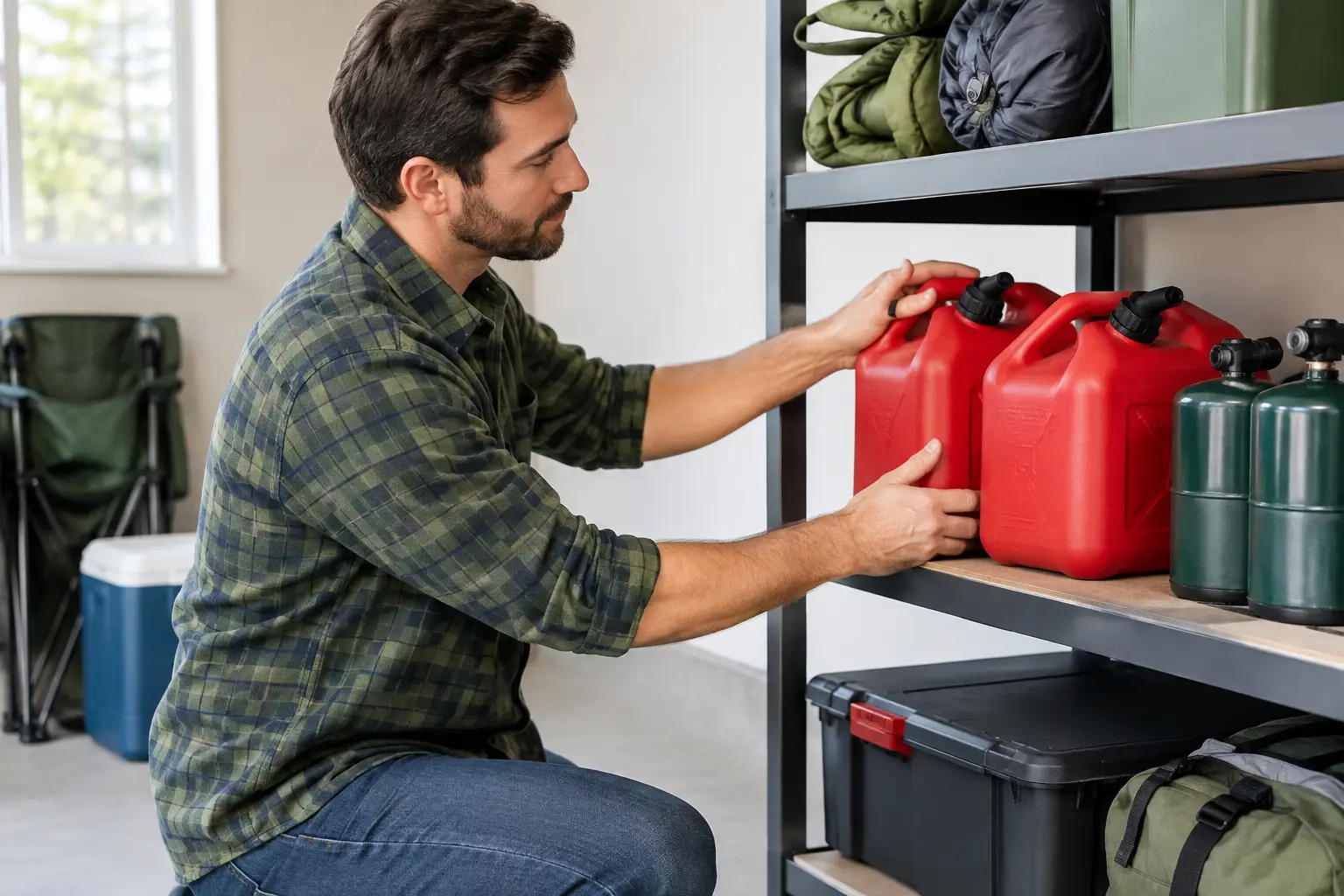
A forgotten fuel canister in a hot truck or a leaky bottle on a garage shelf can turn reliable camp gear into a real hazard. Knowing how to store camping fuel protects your household, preserves your gear, and makes pre-trip packing faster when it is time to get back outside.
The right setup depends on the fuel you use. Propane cylinders, backpacking isobutane canisters, butane cartridges, white gas, and denatured alcohol all have different containers and storage needs. Start with the manufacturer label, then use the rules below to build a safer storage routine around your home, vehicle, and camp kit.
How to Store Camping Fuel by Fuel Type
Fuel is not one category. Treating every canister and bottle the same is where many storage mistakes begin.
Propane cylinders
Propane is heavier than air. If it leaks, it can settle into low areas and collect near an ignition source. Store refillable and disposable propane cylinders upright in a cool, dry, well-ventilated outdoor location. A covered area that stays out of direct sun and away from doors, windows, dryer vents, grills, and open flames is a practical choice.
Do not store propane cylinders in a basement, living space, or enclosed vehicle. A closed garage is also a poor long-term storage location because leaked gas can build up. Keep protective valve caps in place when the cylinder is not connected to an appliance, and inspect the valve for dirt, damage, or corrosion before every trip.
For larger cylinders used with camp stoves, heaters, or portable fire pits, local fire codes and the cylinder label may set limits on how many can be stored at a residence. Those instructions take priority over general advice.
Isobutane and butane canisters
Threaded backpacking canisters and bayonet-style butane cartridges are compact, but they are still pressurized containers. Keep them cool, dry, upright when possible, and protected from direct sunlight. A ventilated shed, covered outdoor gear cabinet, or purpose-built fuel locker is usually a better option than a closet or packed storage tote.
Never leave these canisters in a parked car, especially during warm weather. Vehicle interiors can heat up quickly, even when the outside temperature seems manageable. Heat raises pressure inside the canister and can damage seals or trigger the pressure-relief system.
Avoid placing canisters where they can rust. Moisture around the bottom rim, valve, or seams can weaken the steel over time. If you camp in wet conditions, wipe the canister clean and dry before putting it away.
White gas and other liquid camp fuels
White gas, naphtha-based camp fuel, and similar liquid fuels should stay in their original container or an approved fuel bottle designed for that exact use. Store bottles tightly closed in a cool, dry, ventilated place away from flames, pilot lights, electrical equipment, and anything that can spark.
A detached shed or ventilated outdoor storage cabinet is preferable to storing liquid fuel inside the home. Do not transfer white gas into drink bottles, food containers, or unmarked jugs. Even on a short trip, an unclear container creates a dangerous risk of accidental ingestion or using the wrong fuel in a stove.
Keep only the amount you are likely to use. Large, aging supplies are harder to manage and may not burn as cleanly after long storage. If a fuel bottle is swollen, leaking, badly dented, or has a damaged cap or gasket, set it aside in a safe outdoor location and follow local household hazardous-waste guidance for disposal.
Alcohol fuel
Denatured alcohol and alcohol stove fuel are flammable liquids, even though they are not stored under pressure. Keep them in an approved, clearly labeled container with a secure cap. Store them away from heat, direct sun, and ignition sources, ideally in the same cool, ventilated area you use for other liquid fuels.
Alcohol flames can be difficult to see in daylight. That makes leak prevention and careful handling especially important. Never refill a stove while it is hot, and never store a fuel bottle with residue on the outside.
Choose a Storage Spot That Controls Heat and Fumes
The best fuel storage area is not necessarily the closest one to your camping bins. Convenience matters, but ventilation, temperature, and separation from ignition sources matter more.
Look for a shaded, dry location with steady airflow. Keep fuel away from water heaters, furnaces, generators, battery chargers, power tools, grills, and smoking areas. Avoid places that experience extreme heat, including window ledges, attics, uninsulated metal sheds, and vehicle cargo areas.
A basic outdoor cabinet can work well if it protects fuel from weather without trapping fumes. Avoid sealing pressurized fuel inside an airtight plastic tote. A tote may keep gear organized, but it can also contain vapors if a valve leaks. Use a storage solution intended for flammable materials when possible, or keep containers upright and separated in a ventilated area.
If you live in a region with very cold winters, do not move fuel inside the house just to keep it warm. Most camping fuels tolerate cold storage better than they tolerate heat and enclosed spaces. Check the container label for its recommended temperature range and follow it.
Separate Fuel From the Rest of Your Camp Gear
Fuel can damage gear long before it becomes a fire risk. Leaks can ruin sleeping bags, food, tents, and water-treatment equipment. Give fuel its own designated space rather than dropping it into the same bin as cookware and soft goods.
Keep stove fuel away from food and drinking water. Do not store a fuel bottle next to paper maps, fire starters, or loose batteries. For a family camp setup, a labeled fuel bin or dedicated shelf makes it easier for everyone to know what should not be handled casually.
Before storing a stove, disconnect the fuel source when the manufacturer allows it. For propane appliances, check that valves are fully closed and the connection is clean. For liquid-fuel stoves, release pressure only as directed in the manual. Never assume a stove is empty just because it did not run on the last outing.
Inspect Fuel Before and After Every Trip
A quick inspection catches most problems before they reach your campsite. Check cylinders and canisters for deep dents, rust, bulges, damaged threads, and bent or dirty valves. Look closely at liquid-fuel bottle caps, seals, pump assemblies, and O-rings.
Use your sense of smell, but do not rely on it alone. Propane and many fuel gases have an added odorant that helps reveal leaks, while other fuels may be less obvious. If you suspect a leak, move the container away from people and ignition sources without operating switches, vehicles, or electronics nearby. Do not test for leaks with a flame. A simple soap-and-water solution on a propane connection can reveal bubbles during a controlled inspection outdoors.
Mark partial canisters and bottles so you know what is ready for the next trip. This is especially useful for backpacking, where fuel planning depends on the number of nights, expected temperatures, and whether you are melting snow or cooking for a group.
Transport Is Different From Storage
Camping fuel may need to ride in your vehicle, but a vehicle should not become its storage location. Transport fuel only when you are headed out, returning home, or taking it for proper disposal. Keep cylinders upright, secured against rolling, and separated from direct sun and heat.
Crack no windows solely as a workaround for fuel storage. Ventilation helps during transport, but it does not make an unattended hot vehicle safe for pressurized fuel. At your destination, unload fuel first and move it to an appropriate shaded outdoor spot.
For long road trips, inspect containers at fuel stops and after rough roads. A canister that has been crushed under camp chairs or a cooler may no longer be safe to use.
A Simple Fuel Storage Checklist
Before putting fuel away between trips, make sure each item meets these basics:
- The container is approved, clearly labeled, sealed, and free of serious damage.
- Pressurized cylinders and canisters are cool, upright, and protected from direct sunlight.
- Liquid fuels are stored away from food, water, and absorbent camp gear.
- The storage area is dry, ventilated, and clear of flames, sparks, appliances, and battery-charging equipment.
- Fuel is not being kept long-term in a car, tent, basement, or living space.
A little organization goes a long way here. Set up one dependable place for fuel, inspect it when you unpack, and pack only what your next trip requires. That leaves you with a cleaner camp setup, a safer home base, and one less thing to troubleshoot when the stove needs to light at dusk.
