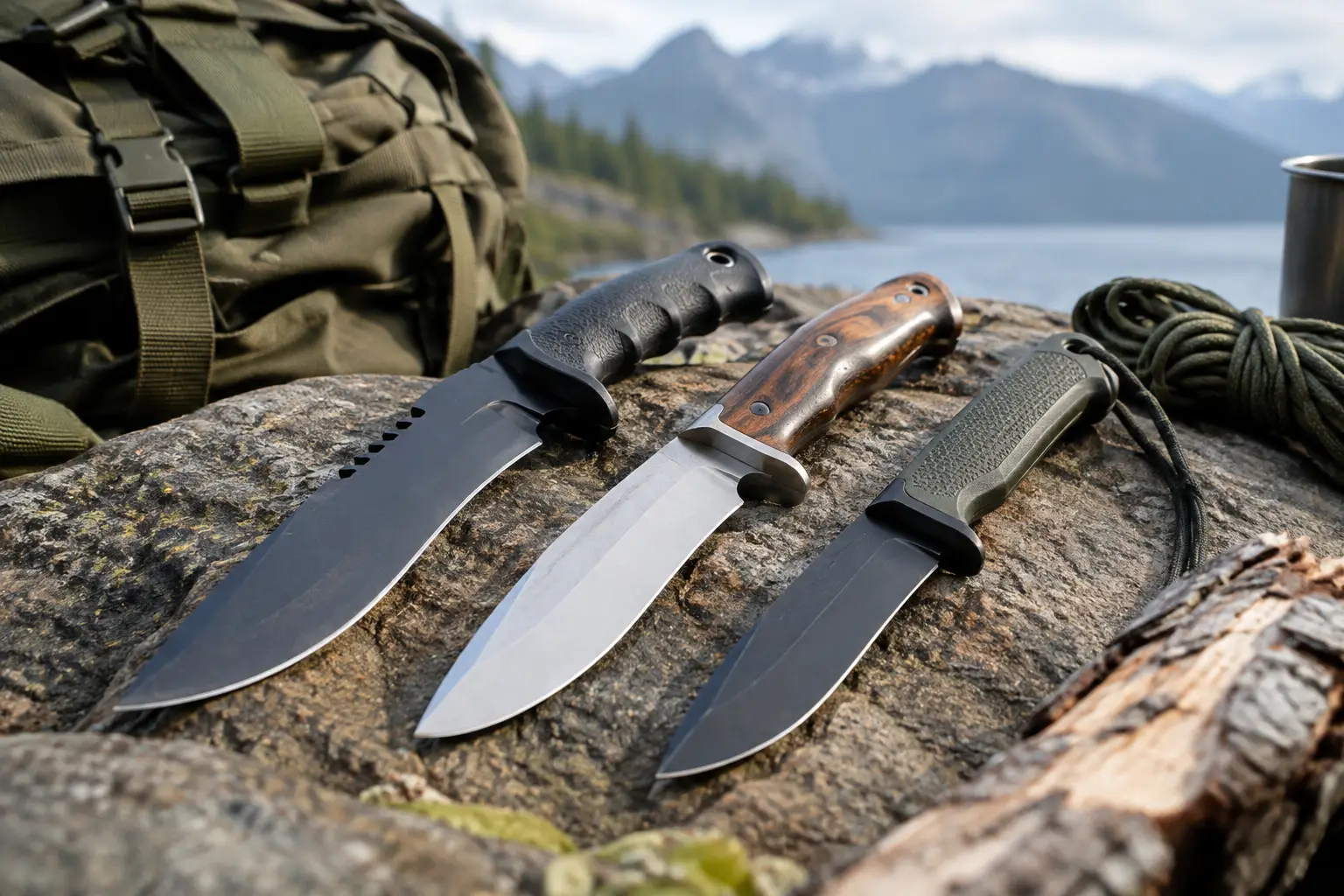
A knife that feels impressive at the kitchen table can become a burden once your hands are cold, wet, or tired. Oversized blades, hollow handles, or a long list of built-in gadgets do not define the best outdoor/camping knives. They are dependable cutting tools you can carry comfortably, control confidently, and use for ordinary camp tasks when plans change.
For most campers, hikers, hunters, and vehicle-based travelers, the right choice starts with the work at hand. Cutting cordage, preparing food, making kindling, trimming repair materials, and handling basic campsite tasks call for a different knife than a large blade meant for heavy wood processing. Choose the tool for your actual trips, then build the rest of your camping gear around it.
Start With the Jobs You Need It to Do
An outdoor knife should earn its space in your pack, belt kit, truck, or camp box. Think through the jobs you are most likely to face. Around camp, that may mean cutting paracord, opening food packaging, shaving tinder, splitting small pieces of dry wood with a baton, or repairing a broken strap. During a roadside or backcountry emergency, it may help you cut tape, clothing, webbing, or improvised materials.
That is why a medium-size fixed blade is often the practical middle ground. A blade around 4 to 6 inches gives you enough length for controlled wood work and general utility without becoming awkward on a hike. A 9-inch blade may look capable, but it is heavier, harder to carry, and less precise for everyday cutting. On the other hand, a small folding knife is excellent for routine use but may not be the tool you want for repeated pressure, batoning, or work in gloves.
An outdoor camping knife is not a replacement for a folding saw, hatchet, first-aid kit, navigation tool, fire starter, shelter, water treatment, or communication device. A well-planned trail setup spreads jobs across purpose-built equipment instead of expecting one blade to solve every problem.
Fixed Blade or Folder?
For a primary camping tool, a fixed blade has clear advantages. There is no pivot to clog with dirt, no lock to fail under heavy use, and no need to open it before a time-sensitive task. Fixed blades also tend to offer a stronger grip and a full-length handle, which matters when you are wearing gloves or working in rain.
A folding knife still has a place. It is compact, easy to keep in a pocket, and useful for food prep, cordage, fishing line, and small repairs. Many experienced outdoors people carry both: a fixed blade for camp and emergency tasks, plus a smaller folder for clean, precise cutting. If you carry only one knife for day hikes or lightweight backpacking, a quality locking folder can be the better choice because you are more likely to have it with you.
The trade-off is simple. Fixed blades provide strength and faster access. Folders reduce bulk and weight. Match that trade-off to your travel style, distance from help, expected weather, and the other tools already in your kit.
What Makes a Knife Strong?
Full tang construction
Look closely at how the blade connects to the handle. A full-tang knife has steel that runs through the entire length of the handle. This construction is generally the best choice for harder outdoor use because it handles twisting, pressure, and repeated work better than a narrow hidden tang or a hollow handle design.
Full tang does add weight, but that weight is often worthwhile in a knife intended for shelter building, firewood preparation, or emergency use. Check that the handle scales are secure and that there are no sharp edges or uncomfortable corners where the steel meets the grip.
Blade steel
Steel selection comes down to edge retention, toughness, corrosion resistance, and maintenance. There is no single best steel for every trip.
High-carbon steels are often tough and straightforward to sharpen in the field. They can be a smart option when you expect hard use and are comfortable wiping and oiling the blade after exposure to moisture. Their weakness is rust. Salt air, rain, sweat, and a damp sheath can quickly create corrosion if the knife is neglected.
Stainless steels are generally easier to maintain in wet climates, around rivers, or during coastal trips. Many modern stainless options hold an edge well, though some may take more time to sharpen. For most casual campers and family camping setups, corrosion resistance and easy care may matter more than squeezing out the last bit of edge retention.
Whatever steel you choose, bring a simple sharpener and learn to use it before your trip. A dull knife requires more force, slips more easily, and turns basic work into frustration.
Blade shape and edge style
A drop-point blade is a reliable all-around shape. Its strong tip and curved cutting edge work well for general camp chores, food prep, and controlled carving. A flat or Scandinavian-style grind is also popular for wood carving because it makes the edge easy to guide through material.
Avoid serrations on a primary outdoor blade unless you have a very specific need for them. Serrated sections can be useful on rope and webbing, but they are harder to sharpen in the field and less useful for carving, food prep, and fine tinder work. A plain edge is the more versatile option for most trail users.
Handle, Grip, and Sheath Matter as Much as the Blade
A sharp blade is only useful when you can hold it securely. Choose a handle that fills your hand without forcing an overly tight grip. Textured rubber, G-10, micarta, and well-shaped polymer handles can offer dependable traction in wet conditions. Smooth wood can be comfortable, but test it carefully if you expect rain, snow, or sweaty hands.
If possible, handle the knife while wearing the gloves you use for camp work. Check for hot spots around the palm, finger guard, and handle butt. A grip that feels fine for two minutes can become painful after processing kindling for half an hour.
The sheath is part of the safety system, not an accessory. It should retain the knife securely when you bend, sit, climb into a vehicle, or move through brush. It should also allow a clean draw without exposing too much blade. Leather can be durable and quiet but needs care in wet weather. Molded polymer and nylon sheaths are often lighter and easier to clean. For backpacking, consider how the sheath mounts to a belt, pack strap, or pack pocket so the knife stays accessible without interfering with a hip belt.
Features Worth Having and Features to Question
Some extras add real utility. A lanyard hole can help secure a knife during water crossings or make it easier to retrieve from a pack. A pronounced spine may be useful for striking a ferro rod, provided the manufacturer designed it for that purpose. A simple, solid pommel can assist with light tapping tasks.
Be skeptical of features that weaken the core tool. Hollow handles that store matches or fishing line may sound useful, but they can compromise strength. Built-in compasses are rarely as dependable as a separate quality compass. Giant sawback spines can snag during cutting and often do less work than a compact folding saw.
A good rule is to buy the knife for its blade, tang, grip, and sheath. Add fire, signaling, navigation, water, and shelter supplies separately. NorthWest Trail Co customers building a practical camp or emergency kit will usually get better results from several reliable tools than one novelty item that promises everything.
Carry and Use Your Knife Safely
Know the knife laws where you live and travel, including rules for blade length, concealed carry, and public lands. Laws can differ by state, city, park, and campground. Transport the knife securely and use it only for legitimate outdoor, work, and emergency tasks.
In the field, create a clear cutting zone (remember the Boy Scout blood circle). Keep people outside arm's reach, cut away from your body, and stabilize the material before cutting it. Never brace wood against your leg for batoning or carving. If you are tired, cold, or rushing, take a moment to reset before using the blade. Most knife injuries happen during simple tasks performed carelessly, not dramatic survival scenarios.
Keep the blade clean and dry after use, especially after food prep or wet-weather travel. Check screws, sheath retention, and edge condition before each trip. A knife that is maintained at home is far more useful than one that spends all season at the bottom of a pack.
Choose a camping knife you will actually carry, practice with on ordinary camp chores, and maintain without fuss. When the weather turns or a plan changes, familiar, practical gear is what keeps a small problem from becoming a long night.
